
Odimmegwa Johnpeter/Abuja
The Economic Community of West African States Parliament has advocated the need for the overhaul of the region’s educational system to meet the aspirations of the people and the needs of the economies.
This warning was handed down by Prof. Komi Selom Klassou, President of the National Assembly of Togo. According to him, failure to align will lead to a disconnect that hinders productivity, competitiveness, and stability in the region.
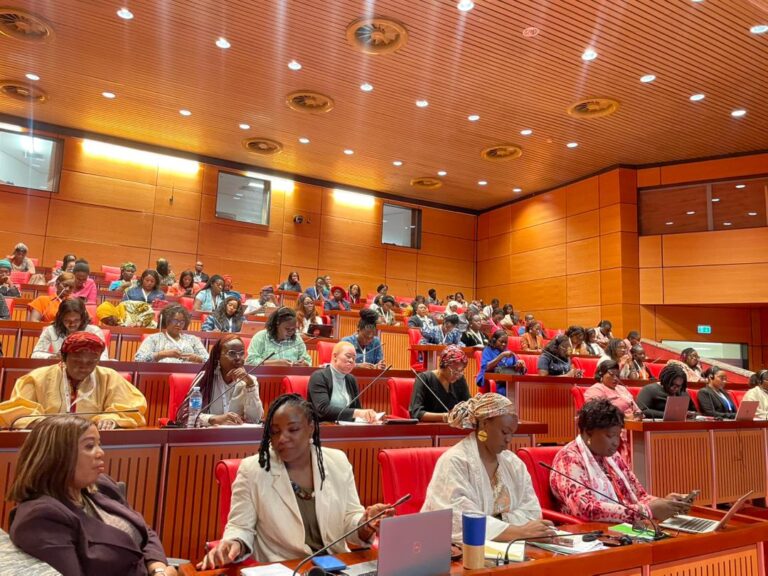
Klassou spoke on Monday in Lome, Togo, at the opening of the joint committee delocalisis meeting on Education, Science and Culture/ Committee on Health/ Committee on Telecommunications and Information Technology in Lome, Togo.
The meeting has the theme: “Strengthening Curriculum Alignment with Socio-Economic Needs of the ECOWAS Region”.
Klassou stressed the importance of education, stressing that it is the bedrock of any prosperous nation.
He therefore emphasised that the theme of the Lome meeting is an invitation for the sub-region to rethink its educational systems in the face of technological developments, the mismatch of skills with the job market, and emerging industrial diversification.
Klassou, who was represented by the Speaker of the ECOWAS Parliament, Hadja Mémounatou Ibrahima, said: “Education is the foundation of any prosperous nation. Through it, we shape not only minds and bodies but also the future of our societies.
“The theme of this meeting, “Strengthening the alignment of educational programs with the socio-economic needs of the ECOWAS region,” is extremely relevant. It invites us to rethink our educational systems in the face of technological developments, the mismatch of skills with the job market, and emerging industrial diversification. This theme is a call to action. It urges us to transform our demographic wealth, this dynamic youth, into a lever for building a prosperous future. This involves overhauling our educational programs so that they meet the aspirations of our people and the needs of our economies.
“This call requires us to reclaim our historical and intellectual narrative, revive pride in our cultural heritage, the foundation of our identity, and redefine our teaching programs so that they truly serve our own aspirations.”
He warned further that “Education is no longer just a tool for transmitting knowledge; it is the foundation of our intellectual, economic, and social sovereignty. Our nations can not achieve sustainable emergence without a qualified human capital. Of course, education remains a right, but it is now a strategic lever for our intellectual, economic, and social sovereignty. Without qualified human capital, our nations can not achieve sustainable emergence.
“We must align our educational programs with socio-economic realities. This involves anticipating skills needs, promoting innovation and adaptability, and strengthening technical and vocational education. This is a priority to reduce youth unemployment and transform our demographic potential into a real economic dividend.
“Also, it becomes imperative to conceive education beyond the citizen’s right, it constitutes, as a strategic lever. The need to align our programs with the real needs of our economies, to reduce youth unemployment and transform our demographic potential into an economic dividend, is clear. Indeed, without a resolute alignment of curricula with socio-economic realities, whether it is emerging sectors, technological changes, or entrepreneurial skills needs, we risk perpetuating a cycle of disconnection that hinders productivity, competitiveness, and stability in our region.”
The President of the National Assembly of Togo also reminded the Joint committee that there is a legal backing to what they are doing in Protocol A/P3/1/03 which was adopted by the Conference of Heads of State and Government of ECOWAS in 2003. The protocol provides for harmonization of the regional educational policies and promotes quality, accessible, and relevant education.
“ It is in this spirit that we must rely on the identified pillars: better knowledge of the labor market and anticipation of future skills; a reform of programs focused on practical skills, innovation, and adaptability; the strengthening of Technical and Vocational Education and Training; and a greater commitment of stakeholders through solid public-private partnerships,” he stressed .
Citing the ongoing reform In Togo, Klassou said President Faure Essozimna Gnassingbe’s transformative and modernizing vision of national education has laid the foundations for an educational system resolutely turned towards the future.
“ Thanks to his leadership, we have been able to rely on fruitful collaborations between educational institutions and the private sector, thus promoting education in entrepreneurship and increased investment in continuous training to meet the challenges of the job market.
“These efforts, driven by this strategic vision, fully meet the objectives of this meeting. It is about evaluating the relevance of study programs, from primary to higher education, while strengthening technical and vocational education to improve employability and encourage self-employment. These initiatives also support pedagogical approaches focused on problem-solving and critical thinking, with the aim of harmonizing certification standards within ECOWAS.
“It is clear that it is through this ambition that Togo is positioning itself today as a key player in the educational transformation of our region and in building a promising future for our youth.”
He therefore stressed that “The presence of the Joint Committee on Health and Telecommunications underscores the interdependence of our challenges. Health is a fundamental right, and the training of health professionals must meet the specific needs of our region. Information technologies are a key catalyst for improving access to health and education, even in the most remote areas. We must also reduce the digital divide, ensure cybersecurity, and promote distance learning. These actions are essential for inclusive governance and sustainable development.
“Imagine an ECOWAS where youth, armed with digital and entrepreneurial skills, is a driver of growth and regional integration. This is the goal we share: reduce unemployment, harmonize qualifications, and transform education into a powerful lever for development.
“I therefore consider this meeting as both a space for discussion and the starting point for concrete actions. I call on all participants: governments, academic actors, the private sector, civil society, and development partners to unite their positive energies to formulate strategic and realistic recommendations. Together, we can build educational systems capable of preparing our young people for the challenges and opportunities of tomorrow.”
In his remarks, Hon. Kweku George Hagan from Ghana and also Chairman Committee on Education, Science and Culture stressed that education remains the most strategic lever for sustainable development.
He, however, said that “its transformative power depends not merely on access, but on relevance.”
He therefore warned that the region’s educational system must adapt to a fast-evolving landscape characterised by rapid population growth, technological disruption, youth unemployment, and climate vulnerability.
“Currently, our labour markets are shifting faster than our curriculum. The widening gap between training and opportunity created a troubling paradox: vacancies without skilled disconnect between what we teach and what our economies demand,” he added.
To unlock the demographic dividends of the regional youth population, Hagan said there must be a shift from credential-oriented system to competency-driven framework.
He said: “Curriculum alignment is not a theoretical exercise; it is a strategic necessity l. When education responds to the demands of agriculture, industry, and the digital economy, we do more than teach-we build a workforce that is adaptable and competitive.
“The task ahead requires evidence-based policymaking, investment in teacher capacity, and the integration of emerging technologies.”
Listing things that must be done for the sub-region to turn the corner, the Ghanaian Parliamentarian said it must embed digital literacy, green skills, and entrepreneurial thinking at all educational levels; strengthen technical and vocational education and training and Institutionalise continuous curriculum review in partnership with the private sector.
“Education must not merely follow economic transformation; it must drive it. This requires a structured, continuous dialogue between ministries of education, labour, and industry, alongside private sector leaders and academic institutions.”
Leader of the Togoless delegation to ECOWAS Parliament, Hon. Soklingbé Senou, in his remarks, said the issue is very deep considering the challenges facing education in the sub-region.
He noted that time is changing with emerging new trends; adding that matching education with job demand must be taken seriously.
He stressed that the issue at hand is deep and so “the educational sector must not be about production of certificates.”
END

