
Odimmegwa Johnpeter/Abuja
The Honourable Minister of Humanitarian Affairs and Poverty Reduction, Dr. Bernard M. Doro is seeking more funding of the ministry’s budget and as well seeking partners to lift up the poor and make them economically viable. This was contained in a statement signed by Janet McDickson, Director, Information, and Public Relations.
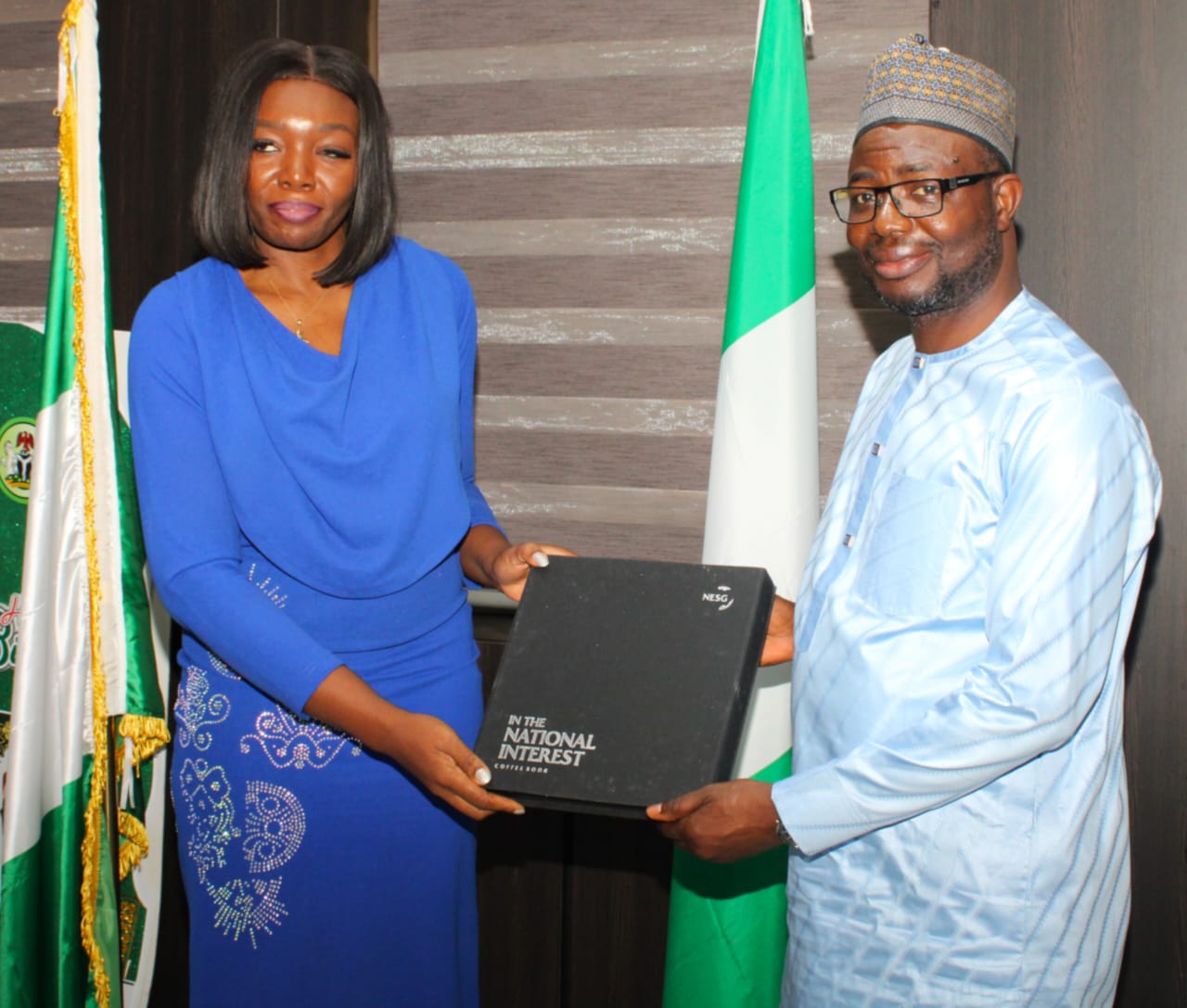
Dr. Doro made this passionate request when he received a delegation from the Nigerian Economic Summit Group (NESG) who paid him a courtesy visit in his office.
He emphasized the Ministry’s determination to scale efforts toward lifting up to 100 million Nigerians out of poverty by 2029, noting that adequate financing remains the key constraint to achieving the target.
The Minister called on NESG to undertake independent costing and analytical work to support the expansion of social protection programmes, stating that credible projections from reputable institutions would strengthen the case for increased funding and policy backing.
He outlined the Ministry’s flagship program , One Humanitarian One Poverty Reduction System (OHOPRS), as a comprehensive reform agenda designed to address fragmentation and duplication across humanitarian and social protection interventions nationwide.
According to the Minister, the system is built on five core pillars:
i. Governance and Coordination: Establishing a national framework to harmonize interventions across ministries, states, development partners, and civil society. ii. Unified National Registers: Harmonizing multiple intervention registries into a single National Social Register, National Beneficiary Register, and Poverty Exit Register to track citizens through a structured poverty graduation pathway.
iii. National Data Centre and AI Analytics: Developing a centralized data ecosystem to track interventions nationwide and deploy analytics for evidence-based decision-making.
iv. Poverty Exit Pathways: Integrating cash transfers with skills development, access to finance, mentorship, and business support to enable sustainable livelihoods.
v. Financing and Monitoring Framework: Expanding the Humanitarian and Poverty Trust Fund and strengthening, monitoring, and evaluation to ensure accountability and measurable outcomes.
Dr. Doro noted that while Nigeria receives substantial humanitarian and development funding, the lack of coordination has limited impact, stressing that, the new system will ensure efficiency, transparency, and measurable results, he hopes to partner with the group for sustainable results alongside other partners.
Earlier, NESG leader Seun Ojo reaffirmed the Group’s commitment to partnering with the government to promote inclusive economic growth and evidence-based policymaking.
She explained that NESG operates through a four-pillar engagement model as a dialogue partner, connector, accountability partner, and technical intervenor, with research and data at the centre of its work.
Ms. Ojo highlighted NESG’s long-standing collaboration with the government since 1993 and noted the organization’s flagship annual summit and economic outlook reports as key platforms for policy dialogue and reform advocacy.
Research Insights: From Stabilisation to Inclusive Growth.
Presenting key findings, Dr. Joseph Ogebe, Head of Research and Development at NESG, acknowledged recent macroeconomic stabilisation gains the government is making, including improved GDP growth, rising foreign reserves, and reduced fiscal deficits.
Dr. Ogebe identified 2026–2029 as Nigeria’s “consolidation phase,” calling for stronger focus on:
Tackling inflation and strengthening macroeconomic stability
Accelerating structural reforms in agriculture and manufacturing to drive job creation
He appreciated the ministry’s efforts in working hard towards poverty reduction, which automatically improves the economy. Adding that, the Ministry plays a central role in translating macroeconomic gains into improved livelihoods through expanded social protection systems. He seeks for the collaboration of NESG with the ministry.
END

