
Odimmegwa Johnpeter/Abuja
According to the World Health Organisation (WHO), about one million people die every year on account of drug-resistant bacterial infections. It further warns that antimicrobial resistance (AMR) is imposing growing costs on families, health systems and economies.
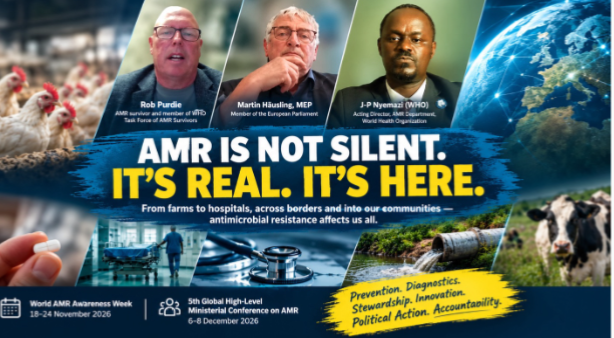
This was disclosed by Dr. Jean-Pierre Nyemazi, Acting Director of the WHO Antimicrobial Resistance Department during a virtual news briefing organised alongside an exhibition at the European Parliament on the human impact of antimicrobial resistance.
Nyemazi further noted that the disease burden associated with Antimicrobial Resistance is huge affecting humans, animals, plants, food systems, economies, and the environment, with drug-resistant pathogens able to move across sectors and national borders.
Similarly, he stressed that the scale of deaths caused by AMR means the issue should no longer be treated as an isolated silent or abstract health challenge.
He enjoins the commitments of national governments to back the fight with legislation, financing, and accountability, while the media has an important role in taking the issue beyond scientific circles and into public debate.
According to Nyemazi, the most effective approach to the fight against the AMR is prevention highlighting vaccination, infection prevention and control, water, sanitation and hygiene, improved animal husbandry, stronger surveillance and responsible use of antimicrobials.
Nyemazi also harped on wider access to quality medicines and diagnostics and measures to reduce environmental contamination.
He further stressed the strengthening of the primary healthcare by national governments so that patients can obtain timely diagnosis and appropriate treatment, noting that limited access to healthcare can drive people to obtain antibiotics directly from pharmacies.
He urged authorities to enforce regulations restricting the dispensing of reserve antibiotics without prescriptions and encouraged the use of technology to monitor and audit medicine dispensing.
On Nigeria, Nyemazi said access to veterinary services remains limited, stating that the problem is often worse outside Europe.
He stressed that tackling AMR requires coordinated action by governments, civil society, the private sector, health professionals, pharmacies, and the public.
Nyemazi said the updated WHO Global Action Plan on AMR, approved by member states at the 2026 World Health Assembly, places greater emphasis on a One Health approach involving human, animal, and environmental health.
The WHO official also stated that a 10 per cent reduction in AMR is achievable through measures including infection prevention and control, vaccination, and improved access to quality antimicrobials, provided countries implement them effectively.
He also called for continued investment in research and development of new antibiotics, antifungals as well as other technologies, while stressing the need to preserve existing medicines through responsible antimicrobial use and better diagnostics.
The briefing featured the exhibition, “AMR: The Human Stories Behind a Silent Pandemic,” organised by the WHO and European Parliament Member Martin Häusling.
An AMR survivor and member of the WHO Task Force of AMR Survivors, Rob Purdie, also shared his experience of a serious fungal infection that progressed to meningitis after delayed diagnosis.
Purdie said his illness resulted in prolonged treatment, severe side effects and major financial and personal consequences, underscoring the importance of early diagnosis, responsible use of antimicrobials and investment in new medicines.
The WHO has set “One Health, One Action, Prevent AMR Now” as the theme for this year’s World AMR Awareness Week, scheduled for November 18 to 24.
END

