
Odimmegwa Johnpeter/Abuja
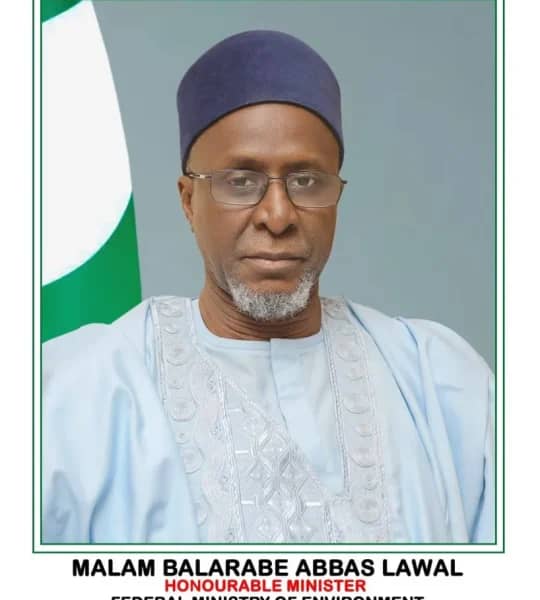
The Honourable Minister of Environment, Balarabe Abbas Lawal, has stated that safe sanitation and hygiene is not just a matter of public health but also a critical component of sustainable development.
The Honourable Minister made the assertion during a press briefing to commemorate the 2025 National Environmental Sanitation Day in Abuja.
According to the Minister, the commemoration with the theme: “Safe Sanitation and Hygiene for Disease Prevention” goes a step further than business as usual by emphasizing not just the provision of sanitation facilities but also the importance of managing them safely to prevent disease. It highlights the need for a more comprehensive approach that includes proper hygiene practices, safe waste disposal, and effective management of sanitation facilities to protect public health. He further noted that by focusing on “safe” sanitation, the theme underscores the critical role that safe and hygienic practices play in preventing the spread of diseases, making it a more nuanced and impactful approach.
It would be recalled that the National Environmental Sanitation Day is commemorated on June 28th of every year. It is a national advocacy and sensitization day dedicated to increasing awareness and understanding of the importance of sanitation and hygiene as an effective and affordable way to prevent diseases, save lives and ensure effective and quality sanitation delivery services as well as meeting SDGs 3 and 6 by 2030. It was instituted in June 2005 by Mr. President at the launch of the National Environmental Sanitation Policy when he declared 28th June of every year as National Environmental Sanitation Day (NESD).
Stressing further, he said: “It is important to note that poor environmental sanitation is responsible for the occurrence of a significant percentage of preventable communicable diseases, particularly in developing countries, including Nigeria. Vector borne diseases such as malaria, Lassa fever, and dengue fever are exacerbated by poor environmental sanitation, which provide a breeding environment for disease vectors like rats and mosquitoes. The advent of emerging and re-emerging diseases such as COVID-19, cholera, monkey pox, dengue fever has further underscored the fact that access to sanitation and hygiene is not only a fundamental human right that safeguards public health and human dignity but also an essential need when it comes to disease prevention and control.
“Sanitation-related diseases cause morbidity and deaths each year, particularly among vulnerable populations such as children and the elderly, and those with weakened immune systems. A large number of children die every year due to sanitation and hygiene related diseases, and more than 3.5 million children suffer from diarrheal diseases in Nigeria. Children who are less than five years old are more prone to such diseases. These diseases can have significant economic impacts on individuals, families, and communities, including lost productivity, medical expenses, and reduced economic opportunities. Poor sanitation can also lead to contamination of water sources, soil, and air, leading to long-term environmental degradation.
“Ladies and gentlemen, you will agree with me that the issue of sanitation and hygiene in Nigeria can not be overemphasized. Sanitation is a fundamental human right, and access to safe sanitation is essential for human dignity, health, and well-being. Unfortunately, many communities in our country still lack access to basic sanitation facilities, putting them at risk of waterborne diseases and other health hazards. The Ministry is committed to improving sanitation and hygiene practices across the country. We recognize that safe sanitation and hygiene are not just a matter of public health but also a critical component of sustainable development. In recent times, the federal government, through the Federal Ministry of Environment, has made several efforts towards the delivery of sanitation and hygiene mandates to Nigerian citizenry. The Ministry has reviewed and updated the 2005 National Environmental Sanitation Policy and its implementation Guidelines to meet the present emerging and re-emerging sanitation challenges, National Solid Waste Management Policy has been approved by the Federal Executive Council, the National Policy for Antimicrobial Resistance for the Environment Sector has been launched, construction of public toilets across the nation to curb open defecation menace and ongoing awareness creation and sensitization on the dangers of open defecation.
“The theme for this year’s event aligns with the National Strategic Plan of Action for Cholera Control (NSPACC) 2024-2029. This Strategic Plan is a product of our hard-work evidenced by the years of consultations and multi-sectoral collaboration involving the Federal Ministries of Environment, and other Federal and State Ministries, Departments and Agencies, and other key development partners. This strategic plan reaffirms our collective resolve to eliminate cholera and create a healthier, safer Nigeria.
“I would like to commend the states in Nigeria that have reinstated the monthly environmental sanitation (clean-up) exercise, demonstrating their commitment to keeping our environment clean and promoting public health. This initiative is crucial in preventing sanitation-related diseases and fostering a sense of community responsibility. I urge the states that have not yet reinstated this exercise to do so. Working together, we can maintain clean environments and protect the health and well-being of our citizens.
“Distinguished ladies and gentlemen, I am pleased to announce that the 2025 National Environmental Sanitation Day commemoration will be held on 17th July 2025. Although the official date is June 28th, this year, it falls on a Saturday, and we have strategically rescheduled the commemoration to ensure maximum participation and impact. The Federal Ministry of Environment will mark the event with Nasarawa State on the scheduled date, while other states, including the FCT, are expected to commemorate the event as well. In view of the above, commemoration of the 2025 National Environmental Sanitation Day will include the following activities, some of which have already commenced:
Ministerial Press Briefing – which is holding today
Clean-up exercise in communities on 16th July, 2025
National Environmental Sanitation Day main event commemoration on 17th July 2025
“Sanitation and hygiene is a collective responsibility that requires the concerted efforts of government, private sector, communities and individuals. I use this opportunity to solicit the support of Development Partners, Non-governmental Organizations, Organized Private Sector and every individual to work together to promote a culture of cleanliness and good hygiene practices. In this regard, I call upon the media to play a pivotal role in propagating sanitation and hygiene campaigns and awareness, leveraging their platforms to drive positive behaviour change and inspiring a nationwide commitment to environmental sanitation
“In conclusion, as we herald the 2025 National Environmental Sanitation Day, I call upon all Nigerians to join hands in promoting safe sanitation and hygiene practices for disease prevention. Let us work together to create a cleaner, healthier environment for ourspelves and future generations. I thank you all for your attention, and I look forward to our collective efforts in making a positive impact on our environment,” he also added.
END

