
Odimmegwa Johnpeter/Abuja
The Chief Executive Officer of the Nigerian Financial Intelligence Unit (NFIU), Hafsat Abubakar Bakari, has called for a more proportionate and sustainable approach to Anti-Money Laundering and Counter-Financing of Terrorism (AML/CFT) reforms.
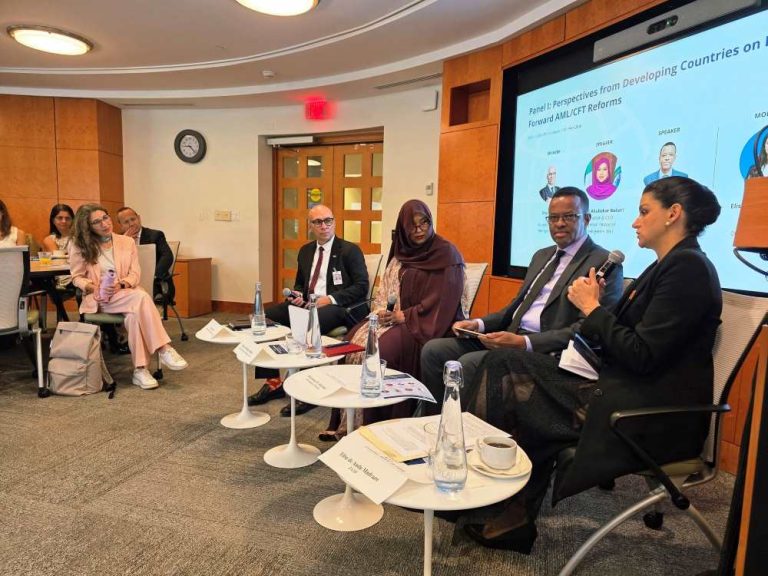
Bakari made the call at a high-level international panel held at the headquarters of the International Finance Corporation in Washington on Friday, during a session titled “Strengthening AML/CFT Frameworks in Developing Countries.”
She highlighted how Nigeria secured sustained political commitment that drove critical reforms, ultimately leading to its recent removal from the grey list of the Financial Action Task Force (FATF). According to her, strong political will remains essential for sustaining reforms, improving national security, and boosting economic development.
The session was moderated by FATF President, Elisa de Anda Madrazo, and featured contributions from the Governor of the Central Bank of Somalia and the Director of Namibia’s Financial Intelligence Centre.
Speaking on Nigeria’s experience as a potential model for other countries, Bakari noted that the establishment of a National ICRG Task Force, reporting to the Inter-Ministerial Committee on AML/CFT/CPF, strengthened coordination among key government agencies.
She explained that this framework helped address institutional gaps, particularly weak inter-agency collaboration, while ensuring that AML/CFT reforms aligned with broader national security objectives.
According to her, integrating financial intelligence with national security priorities enabled authorities to secure increased funding for law enforcement agencies, leading to more effective investigations and disruption of criminal networks.
On financial inclusion, Bakari said Nigeria’s expanding access to formal financial services has enhanced the country’s ability to track illicit financial flows. She cited initiatives such as tiered banking, biometric identification through the Bank Verification Number (BVN) system, and improved oversight of agent banking networks as key drivers of transparency.
She, however, called for stronger global cooperation, urging the FATF and international financial institutions to align country evaluations with targeted technical assistance and better reflect local realities.
Bakari also cautioned that without careful communication, regulatory measures could trigger unintended consequences, including de-risking by international financial institutions, which could limit access to financial services in developing economies.
END

