
Odimmegwa Johnpeter/Abuja
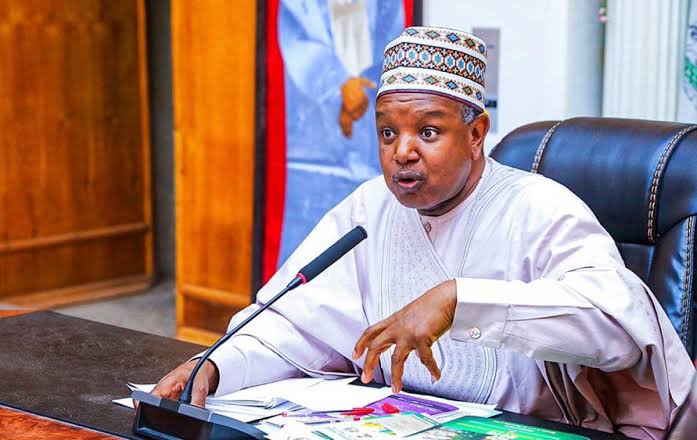
Over the weekend, Minister of Budget and Economic Planning, Senator
Abubakar Bagudu took part in a high-level international dialogue on practical pathways for hydrogen deployment, cross-regional cooperation, and ecosystem development.
The conference was a curated platform that brought together policymakers, industry leaders, investors, standards bodies, and project developers to discuss how hydrogen moves from policy ambition to scalable implementation.
The event was organised by the International Hydrogen Fuel Cell Association (IHFCA), an international, academic, non-profit organisation established by enterprises, research institutions, and industry organisations spanning the entire hydrogen value chain. It was officially registered in July 2022, with the China Association for Science and Technology (CAST) as its supervisory authority. Its secretariat is based in Beijing, China.
On the sidelines of the event, the minister held meetings with the International Hydrogen Fuel Cell Association (IHFCA) and the United Nations Industrial Development Organisation to discuss hydrogen development initiatives by IHFCA and UNIDO, Nigeria’s plan regarding renewable energy investments and innovation, and avenues for collaboration between the organisations.
Site Visit to EMT Madrid
Together with the International Hydrogen Fuel Cell Association (IHFCA), industry leaders, investors, and global project developers, the Honourable Minister of Budget and Economic Planning visited EMT Madrid, which operates a pioneering green hydrogen plant and refuelling station spanning nearly 50,000 square metres. It is Europe’s first municipal hydrogen bus facility, covering the entire green hydrogen cycle: production, compression, storage, and distribution.
The plant generates green hydrogen via water electrolysis, powered by a massive 2.780-panel solar array that makes the facility completely energy self-sufficient. It features high-pressure (350 bar) CETIL dispensers that can fully refuel a city bus in less than 10 minutes.
Built entirely by Spanish engineering companies, the facility was backed by European Union funding, representing an investment of over €17.2 million, and fuels a fleet of 10 hydrogen buses serving the people of Madrid.
END

