
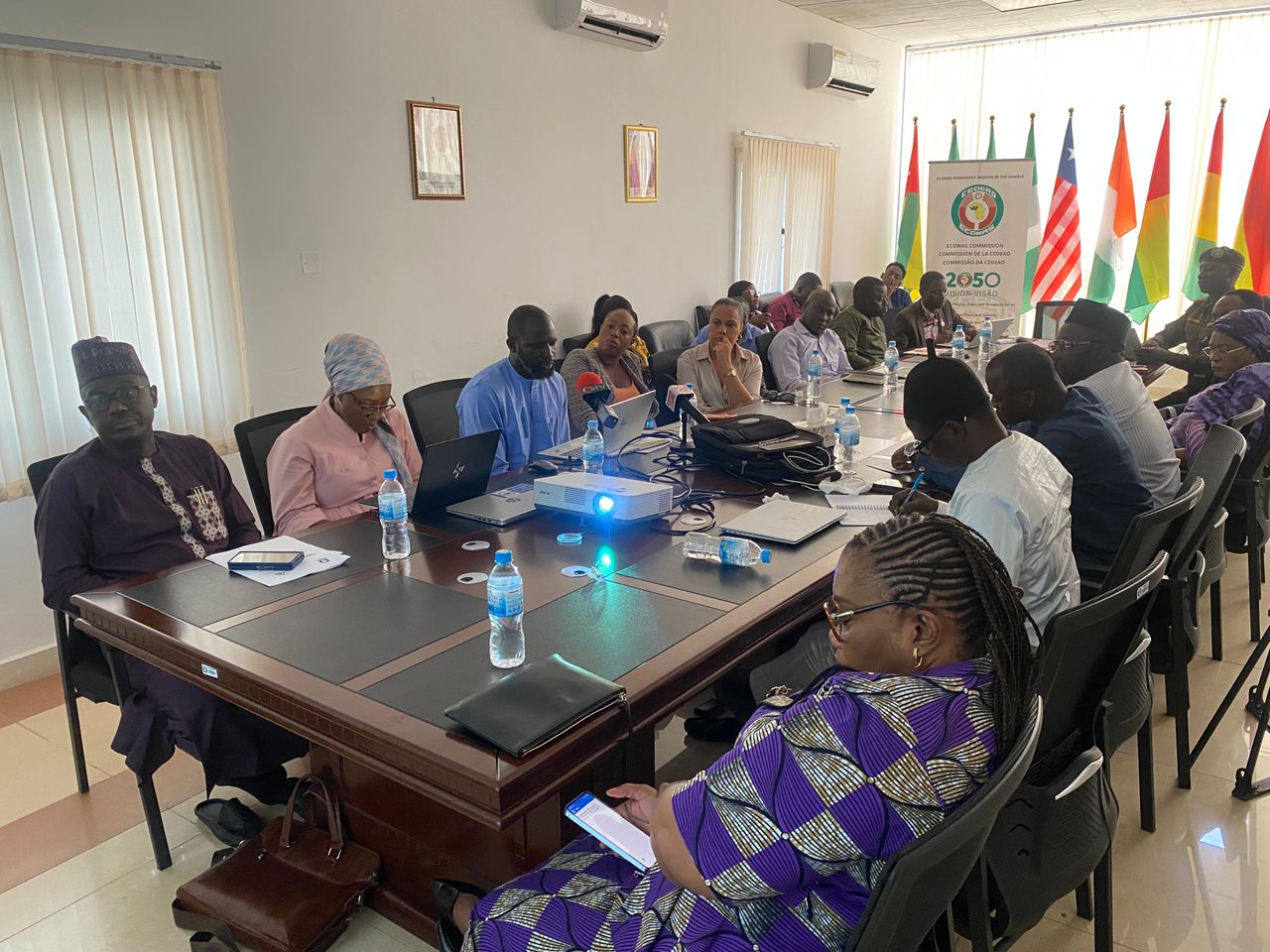
Odimmegwa Johnpeter/Abuja
Alkali JAMMEH, Assistant Superintendent of Immigration in the Gambia Immigration Department, told ECOWAS Parliamentarians, “Current indicators suggest that irregular migration will remain high during the second half of 2026,”
He was speaking at the ECOWAS Parliament’s Parliamentary Citizen Engagement on the Dangers of Irregular Migration and Modern Slavery in Banjul, The Gambia, from 6 to 10 July 2026.
Highlighting key illegal migration trends, Alkali said that:
“Irregular migration remained at a high and sustained level during the first half of 2026 despite intensified border enforcement and interception operations by the Gambia Immigration Department (GID),” adding that operational data indicated that “The Gambia continues to function as both a transit and departure country along the Atlantic migration route.”
He further briefed Legislators that in the second quarter, a significant increase in migrant interceptions, voluntary returns from Libya and Tunisia, and deportations from Europe (mainly Germany and Italy) demonstrated that migration pressures remained strong and are becoming increasingly organized.
“Smuggling networks continue to exploit coastal communities, unauthorized border crossings, and regional migration corridors, requiring sustained intelligence-led operations and enhanced regional cooperation,” he said.
He highlighted that large-scale group interceptions continue and that “majority are West African nationals.’
He noted that there is an increasing number of vulnerable migrants with a significant number of Gambian nationals among those intercepted.
In his analysis, Alkali said:
” Migration remains predominantly male. Nearly one in five migrants are female. Female migration is becoming more visible in mixed migration flows.”
He observed that the presence of children indicates family migration and child protection remains a priority.
On the subregional scale of illegal migration, he noted that:
“Senegalese nationals form the largest ( 842 or 33.7%)
group. The Gambians remain a significant proportion (781 or 31.3%) Guinea (424 or 17.0%), and Mali ( 383 or 15.3%) continue to contribute to migration flows.”
He continued by saying that, “nearly all migrants originated from ECOWAS Member States,” with the main countries being Senegal, The Gambia, Guinea and Mali, adding that the implication suggests that, “migration trend remains predominantly regional.”
Alkali concluded with a grim trend analysis that:
“Key observations during Quarter 2: Increase in organized group movements. Continued dominance of ECOWAS migrants. Persistent involvement of Gambian nationals. Growing a number of women and children. Continued use of irregular migration routes.”
He noted constraints of weak legal frameworks, the need for patrol and surveillance equipment , funding for operations, fuel for patrol, and complicity of the local communities.
On the outlook of illegal migration for the next 6 months, Alkali said:
“Current indicators suggest that irregular migration will remain high during the second half of 2026.
Smuggling networks are likely to continue exploiting coastal departure areas while adapting their methods to evade law enforcement operations.
Migration flows from Senegal, Guinea, and Mali are expected to remain significant, while returns from North Africa and deportations from Europe are likely to continue increasing.
Without sustained enforcement, intelligence gathering, community engagement, and regional cooperation, migrant smuggling activities may become more organized and difficult to disrupt.”
END

