
Odimmegwa Johnpeter/Abuja
The Federal Government has reaffirmed its commitment to strengthening emergency and intensive care services across the country through sustainable healthcare financing, expanded health insurance coverage, improved infrastructure, workforce development, and stronger collaboration among stakeholders. This was contained in a statement signed by Ado Bako, Assistant Director, Information, and Public Relations.
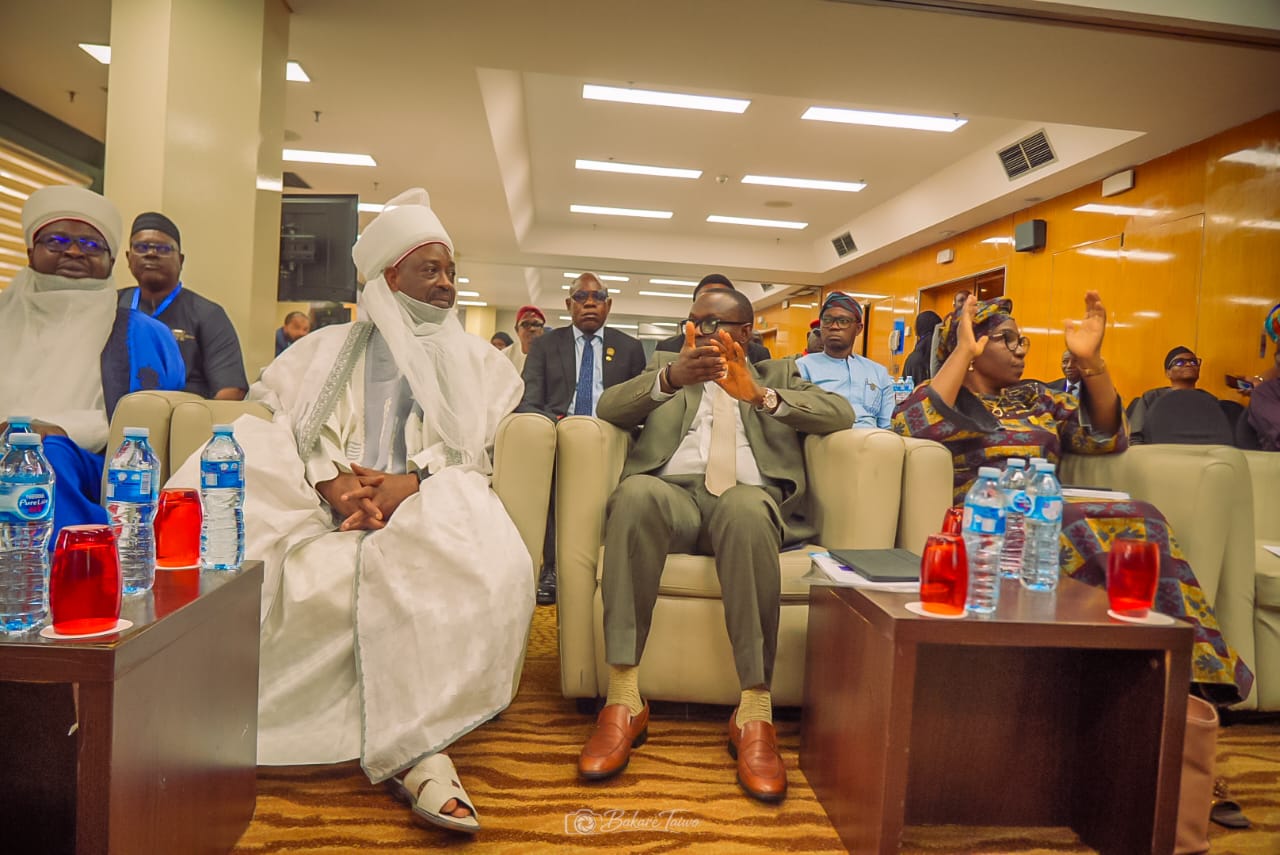
The Honourable Minister of State for Health and Social Welfare, Dr. Iziaq Adekunle Salako, stated this while declaring open the 11th Annual Scientific Conference and Annual General Meeting of the Intensive and Critical Care Society of Nigeria (I-CCSN) with the theme ‘Sustainable Financing for Intensive Care in Public Hospitals in Nigeria.” held on Wednesday 8th July,2026 in Abuja.
Dr. Salako described the conference theme as timely and significant, noting that sustainable financing remains one of the most critical requirements for strengthening Nigeria’s healthcare system and ensuring that critically ill patients have access to quality, life-saving care without suffering catastrophic financial hardship.
He emphasized that critical illness can arise from trauma, infectious diseases, maternal and neonatal complications, surgical emergencies, cardiovascular and neurological conditions, respiratory failure, non-communicable diseases, epidemics, and other public health emergencies, stressing that access to quality intensive care often determines the difference between life and death.
The Minister noted that the Federal Government recognizes emergency and critical care as essential components of a resilient, equitable, and responsive health system capable of advancing Universal Health Coverage, improving health outcomes, and strengthening national health security.
Highlighting the challenges confronting intensive care delivery, Dr. Salako observed that intensive care services require substantial investments in specialized infrastructure, modern equipment, medical oxygen systems, highly skilled multidisciplinary professionals, uninterrupted utilities, diagnostic services, biomedical engineering support, and effective quality assurance mechanisms.
He expressed concern over the heavy reliance on out-of-pocket payments for healthcare, noting that many Nigerian families are pushed into financial hardship when faced with the cost of critical illness.
The Minister disclosed that the National Emergency Medical Service and Ambulance System (NEMSAS), one of the Federal Government’s flagship interventions to improve emergency healthcare delivery, has expanded from its pilot phase in the Federal Capital Territory to 34 states, with efforts ongoing to achieve nationwide coverage.
Dr. Salako further stated that the Federal Government is implementing complementary interventions to strengthen maternal and newborn care, expand healthcare financing, and improve overall service delivery, emphasizing that these initiatives must be integrated with ambulance services, intensive care units, high dependency units, operating theatres, medical oxygen systems, diagnostic services, rehabilitation services, and health insurance schemes.
He called for stronger collaboration among the Federal Government, state governments, healthcare institutions, professional bodies, academic and research institutions, the private sector, development partners, and civil society organizations to build a sustainable critical care system.
The Minister commended the Society for its contributions to advancing critical care practice, research, policy development, professional education, patient safety, and quality improvement in Nigeris, describing professional societies as critical partners in supporting government through technical expertise, policy advocacy, standard setting, and research.
Dr. Salako also emphasized the need to invest deliberately in developing the healthcare workforce by increasing the number of physicians trained in intensive care medicine, critical care nurses,physiotherapists, pharmacists, biomedical engineers, technicians, and other specialists through expanded training, fellowship programmes, and continuous professional development.
He reiterated the Federal Government’s commitment to strengthening medical oxygen systems, recalling lessons from the COVID-19 pandemic, and noted that Pressure Swing Adsorption (PSA) oxygen plants have been provided in several health facilities across the country.
Dr. Salako also advocated stronger referral systems, regional critical care networks, digital health technologies, tele-critical care services, and improved health information systems to reduce inequalities in access to quality critical care.
Recognizing the role of private healthcare providers, Dr. Salako urged greater public-private collaboration, stressing that both sectors serve the same Nigerian population and must work together to improve healthcare delivery.
He challenged participants at the conference to develop practical and innovative recommendations on sustainable financing, financial risk protection for patients, workforce expansion, equipment maintenance, medical oxygen systems, referral networks, and partnerships that would strengthen critical care services nationwide, assuring that the Ministry looks forward to implementing actionable recommendations from the conference.
Earlier in his welcome address, the Chairman Local Organizing Committee of the Conference Dr. Harrison Nwogu revealed that discussions with focus on identifying the underlying reasons for chronic ICU underfunding examine creative finding approaches such as public-private partnerships, insurance integration, and diaspora investments, among others.
Also speaking, the Chairman of the Occasion, Dr. Olalekan Olutesi, CMD, Zenith Medical and Kidney Centre, Abuja, reiterated that no nation around the world that healthcare delivery is single handedly by government. He called on wealthy individuals to invest in the health sector and suggested that the government should introduce tax waiver initiative for willing investors in the health as an encouragement.
The Keynote Speaker, Professor Daprim Samuel Tamuno-Ojuemi Ogaji, highlighted that the paper would look at how to evolve a sustainable financing model that ensures everyone who requires intensive care gets it without thinking of financial implications or constraints.
He further identified some of critical challenges in providing intensive and critical care services to include infrastructure, equipment and supply of adequate consumables, urging for constant power supply for proper maintenance of the available equipment in our facilities.
Speaking on behalf of his counterpart, the Emir of Tula, His Royal Highness, Dr. Abubakar Buba, His Royal Highness,the Emir of Wase Alhaji Dr. Muhammadu Sambo Haruna, commended the Intensive and Critical Care Society of Nigeria (I-CCSN) for convening the conference, describing it as not only a matter of medical, but humanity, equity and national development, emphasizing that intensive care touched every home, community, and parts of the country.
END

