
Odimmegwa Johnpeter/Abuja
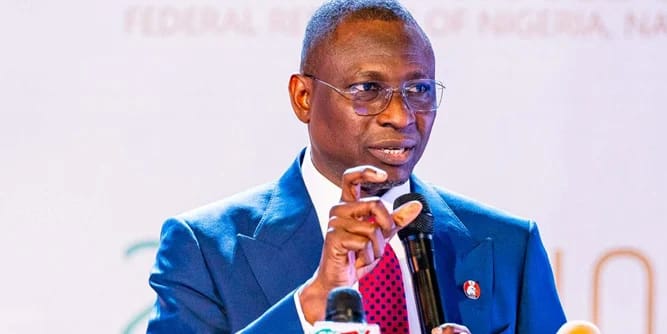
EFCC Chairman Ola Olukoyede has urged religious leaders across Nigeria to continually preach the right religious doctrines to their followers, particularly teachings against corruption and its effects on society.
Olukoyede made the call on Wednesday, September 23, 2026, in Abuja at the 2026 second Council Meeting of the Nigeria Inter-Religious Council, NIREC, and the launch of the Anti-Corruption Interfaith Manual for religious leaders.
Speaking on the theme, “Shared Sacred Flourishing in Nigeria,” the EFCC chairman said stakeholders in the fight against corruption must recognise that the wellbeing of Nigerians depends on the actions of individual citizens and that corruption undermines shared prosperity.
He said one of the most consequential contributions religious leaders could make was to restore the moral dignity of honest living.
Olukoyede said, “Corruption privatizes what is shared, converts the commonwealth into private advantage, and allows one person to flourish by making many others poorer,” adding that the role of the EFCC was to defend the integrity of the commonwealth.
He said Christianity and Islam could retain their distinctive beliefs and traditions while their adherents worked together to promote peace, justice, human dignity and the wellbeing of the country.
According to him, the EFCC had, over the years, engaged religious leaders on the need to incorporate anti-corruption messages into their teachings.
“We have been doing this through the inter-faith framework. Over the years, we have specifically spelt out what should be the roles of religious leaders and the doctrine they need to pass down to their followers. We believe that no religion condones corruption and no faith entertains fraudulent engagements,” he said.
Olukoyede disclosed that the Commission had worked with Christian and Muslim leaders to develop an Inter-Faith Manual containing doctrinal positions from the two faiths on corruption.
“We are using this opportunity to launch the Manual which we hope our religious leaders will surely find useful in preaching anti-corruption messages to their members,” he said.
The EFCC chairman stressed that corruption and financial crimes do not discriminate on the basis of religion or ethnicity.
“Financial crime has no religion. Corruption has no tribe. Fraud does not become Christian or Muslim because of the identity of the person accused of committing it. When public money is stolen, both Christians and Muslims suffer. A badly equipped hospital does not first ask a dying patient where he worships. A collapsed road does not distinguish between a Christian traveller and a Muslim traveller. Unemployment does not respect denomination. Inflation does not spare one faith community,” he said.
He urged pastors and imams to use the manual and actively engage their followers on the consequences of corruption.
Olukoyede also called on religious institutions to play a stronger role in shaping the values of Nigerians, noting that faith communities could help prevent corrupt practices before they occur.
“Religious institutions have extraordinary responsibility in Nigeria’s anti-corruption struggle. The EFCC can investigate a person’s conduct. Faith communities can influence that person’s character. We can prosecute fraud. Religious teaching can cultivate honesty.
“We can confiscate illicit wealth. Churches and mosques can challenge the values that make society worship wealth without questioning its source. We can punish corruption after the event. Faith can help prevent it before it begins,” he said.
END

