
Odimmegwa Johnpeter/Abuja
In his bid to ensure that funding for vaccine is fast tracked in Nigeria health care system, the Chairman of the House Committee on Health Institutions, Hon. Amos Gwamna Magaji has decried the continued delay in the release of ₦108 billion immunization funds earmarked for 2024, warning that the backlog threatens to reverse Nigeria’s already fragile public health progress.
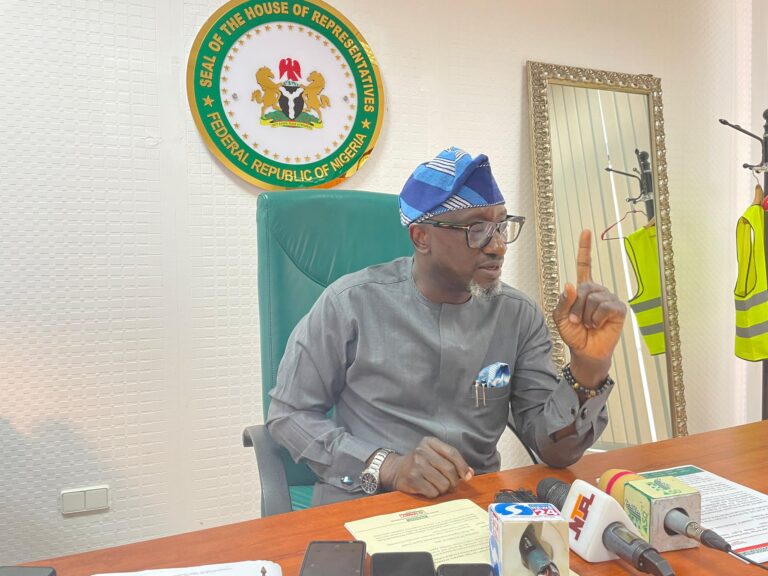
During a media briefing in Abuja on Tuesday,Hon. Magaji who is representing Zangon Kataf/Jaba Federal Constituency in the 10th National Assembly called for urgent placement of critical vaccine related expenditures on first-line charge status, stressing that preventable childhood deaths and worsening maternal mortality cannot wait on bureaucratic budget releases.
According to Hon. Magaji, “We’re talking about immunization funds that should have been released in 2024. This is August 2025. A child born last year is already 8 months old. If vaccines are not administered timely, it’s a disaster waiting to happen”.
The lawmaker also disclosed that his Committee has begun demanding documents from relevant federal agencies to investigate the delay, stating that he would personally push for staggered releases if the full amount can not be disbursed at once. “Can we get ₦40 billion now? ₦50 billion? We can’t keep waiting,” he added.
Magaji lamented that Nigeria now holds the highest maternal and infant mortality rates in the world, surpassing India, with over 1,000 maternal deaths per 100,000 live births, compared to countries with just one or two.
“This is a national emergency,” he declared. “It’s not enough to build roads if we’re losing mothers and babies to preventable causes. Health must be prioritized.”
Hon. Magaji stressed
that vaccine funding is an investment, not an expenditure, citing the high economic and emotional costs of managing disease outbreaks such as polio, diphtheria, yellow fever, and cholera, all preventable through immunization.
He further stated that the House Committee is also pushing for domestic vaccine production, arguing that relying on global markets for procurement is unsustainable given dwindling donor support.
While highlighting the need for cultural and technological interventions to address deep-rooted cultural and religious barriers to antenatal care and hospital deliveries, Hon. Magaji advocated for community-based tracking of pregnant women using mobile technology, handheld fetal scanners, and improved ambulance services at primary healthcare centres.
His words: “There’s no glory in losing a woman during childbirth because she refused Caesarean delivery due to outdated cultural beliefs. A safe birth is what matters,”.
Magaji emphasized the oversight role of his committee over the Federal Ministry of Health and state-level Primary Healthcare Boards, stating that several states rely entirely on federal allocations without making counterpart contributions.
“We are touring states, meeting with governors, health commissioners, and traditional rulers like the Shehu of Borno to secure commitments. It’s time to hold everyone accountable,” he noted.
Making a case for higher Budgetary Allocation for the health sector, he criticized the federal government for consistently underfunding health, with annual allocations rarely exceeding 6-7%, far below the 15% Abuja Declaration benchmark.
“When you divide the total budget by our population, health allocation per capita comes to barely ₦2,700. That’s not even enough to buy malaria drugs,” he said.
Hon. Magaji concluded by reaffirming the committee’s commitment to ensuring full release of the immunization funds, timely vaccinations for children, and comprehensive reforms to reverse Nigeria’s dire health indicators.
“We can manage bad roads, but no one can manage bad health. Our children can’t wait. Mothers can’t wait. The time to act is now.”
END

