
Odimmegwa Johnpeter/Abuja
The Director General of the National Information Technology Development Agency (NITDA), Kashifu Inuwa, has said the next phase of growth in Nigeria’s banking sector will be driven less by capital strength and more by the ability of financial institutions to build digital trust through artificial intelligence (AI), regulatory technology (RegTech), cybersecurity, and resilient digital infrastructure.
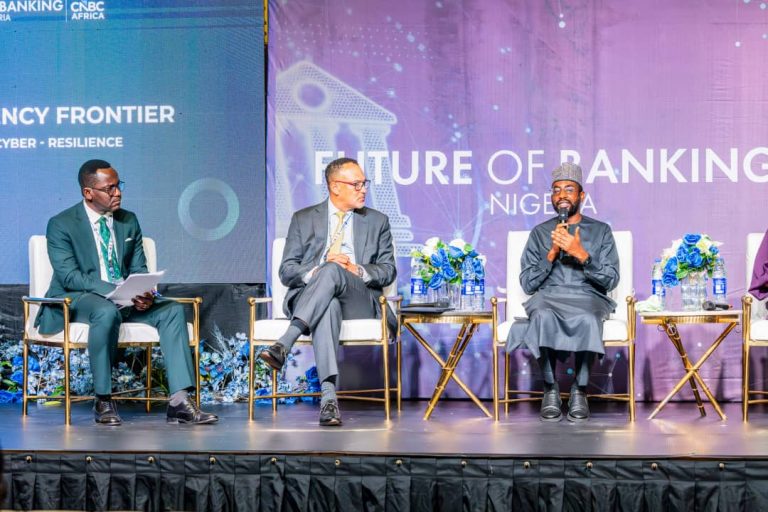
Speaking at the Future of Banking Nigeria Summit organised by CNBC Africa in Lagos, Inuwa said the banking industry is entering a decisive shift where technology, regulation and trust will determine competitiveness more than traditional balance sheet strength.
He spoke during a panel session titled “The Efficiency Frontier – AI, RegTech and Cyber Resilience,” where he noted that while Nigeria’s banking sector has survived major structural reforms over the years, including the 2005 consolidation, the 2009 reforms and ongoing recapitalisation, the current wave of disruption requires a fundamentally different approach.
Inuwa argued that the central question facing financial institutions has changed. “Today’s question is no longer whether we can raise capital, but whether we can protect, preserve, and grow that capital in the digital era,” he said.
According to him, as banking becomes increasingly digital, trust has emerged as the most critical asset in the financial system, requiring strong cybersecurity, stable digital platforms, and effective regulatory oversight. He warned that with customers now interacting with banks primarily through digital channels, even minor system failures or security breaches could significantly erode public confidence.
The NITDA DG described artificial intelligence as a transformative force capable of reshaping banking operations across the value chain. He said AI is already improving efficiency in fraud detection, risk management, customer engagement, decision-making, and service delivery while also enabling personalised financial products tailored to customer behaviour. Beyond efficiency, he noted that AI presents new opportunities for revenue growth and innovation in financial services.
“The future belongs to institutions that can turn data into intelligence and intelligence into better customer experience,” he said.
Inuwa also highlighted the rising importance of Regulatory Technology (RegTech) in modern banking, saying it simplifies compliance, reduces costs, and strengthens transparency. He stressed that regulation must evolve alongside innovation, warning that traditional regulatory models risk lagging behind rapid technological change.
“Technology evolves much faster than traditional regulation. Regulators must work with innovators to build frameworks that protect consumers while enabling innovation,” he said. He added that NITDA continues to adopt collaborative regulatory approaches that balance innovation with oversight across Nigeria’s digital ecosystem.
The NITDA boss further emphasized that cybersecurity is no longer a back-office function but a core business necessity. He said cyber resilience, the ability of institutions to anticipate, withstand, and recover from digital threats, is now central to maintaining stability in Nigeria’s financial system. According to him, uninterrupted digital services and secure infrastructure are essential to sustaining public trust in modern banking.
Inuwa also called for deeper collaboration among regulators and financial institutions to improve access to credit for Small and Medium-sized Enterprises (SMEs). He said AI-powered credit assessment tools can help banks better evaluate business performance, reduce lending risks, and expand financial inclusion for underserved enterprises.
He disclosed that NITDA is implementing Nigeria’s National Artificial Intelligence Strategy, developed in collaboration with key sector regulators, including the Central Bank of Nigeria (CBN). He also revealed ongoing work on National Standards for Sovereign Cloud Infrastructure and Data Classification, aimed at strengthening Nigeria’s digital sovereignty and ensuring sensitive financial and national data remain protected within secure systems.
Inuwa concluded that the future of Nigeria’s banking sector will be shaped by collaboration between regulators, innovators, and financial institutions. He stressed that while capital remains important, the true competitive edge will belong to institutions that can combine technology, trust, and resilience to deliver secure and intelligent financial services in a rapidly evolving digital economy.
“The winners of the next banking era will not just be those with strong balance sheets, but those who can earn and sustain digital trust,” he said.
END

