
Odimmegwa Johnpeter/Abuja
Nigeria has emerged at the forefront of Africa’s drive to transform its globally influential creative talent into a major engine of investment, jobs, trade and wealth creation, as government leaders, investors, development finance institutions and leading creative-sector stakeholders converged in Lagos for the Creative African Nexus (CANEX WKND) 2026. This was contained in a statement signed by Obilor-Duru Augustina Okechi, Head, Press and Public Relations.
Held from November 5–8 at the Wole Soyinka Centre for Culture and Creative Arts, Iganmu, Lagos, the gathering is driving a new conversation around the future of Africa’s creative economy, with stakeholders calling for a decisive shift from simply producing globally consumed music, films, fashion, literature and art to owning the intellectual property, businesses, platforms and distribution channels that generate lasting economic value.
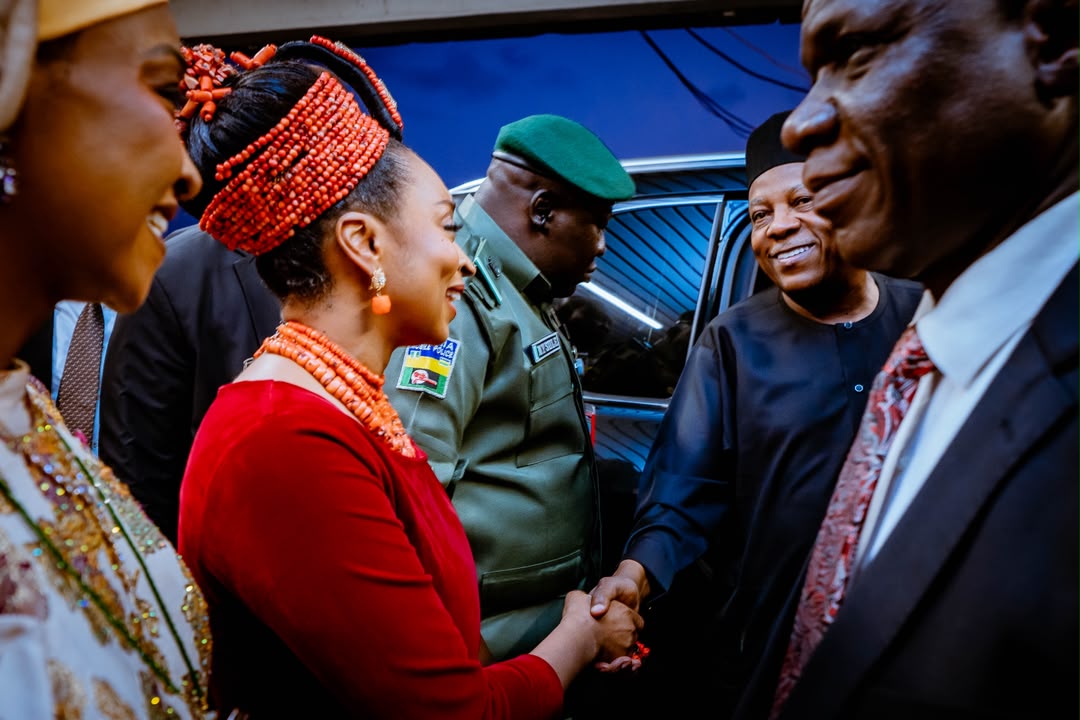
Declaring CANEX WKND 2026 open, Vice President Senator Kashim Shettima welcomed government officials, development partners, captains of industry and representatives of Africa’s creative, cultural and sports sectors to Nigeria, describing the event as more than a cultural gathering.
He said CANEX provides a strategic platform for converting Africa’s creative assets into investment, global market access, economic opportunities and sustainable jobs, particularly for the continent’s growing youth population.
Drawing parallels with the historic FESTAC ’77, the Vice President noted that while Africa once opened its doors to the world to showcase its rich cultural heritage, the continent is now opening a new chapter by positioning its creative industries as engines of economic growth, investment and global competitiveness.
He commended the African Export-Import Bank (Afreximbank) for its leadership in developing Africa’s creative economy, noting that the 2024 edition of CANEX attracted more than 4,000 participants from 81 countries, facilitated over $540 million in deals and secured about $2 billion in commitments to the continent’s creative sector.
Senator Shettima said Nigeria’s creative economy is a strategic pillar of President Bola Ahmed Tinubu’s Renewed Hope Agenda, stressing that the sector must be treated as serious economic infrastructure rather than merely entertainment.
He highlighted Federal Government efforts to strengthen intellectual property protection, improve access to finance and position Nigeria as a global creative hub, while identifying the country’s youthful population, vast resources and exceptional creative talent as major competitive advantages.
He expressed confidence that the next generation of globally competitive creative companies would emerge from Africa, calling for stronger partnerships, expanded markets and sustainable economic opportunities across the continent’s creative industries.
Also speaking, Lagos State Governor, Mr. Babajide Sanwo-Olu, described CANEX WKND 2026 as a major milestone in Africa’s creative and cultural journey, drawing a parallel between the event and FESTAC ’77.
He said that while FESTAC opened Africa’s doors to the world to showcase its culture, CANEX WKND is opening those doors to investment, enterprise and global commercial opportunities in the creative economy.
Governor Sanwo-Olu highlighted Lagos as one of Africa’s leading hubs for film, music, design, publishing and other creative industries, noting that the sector remains one of the fastest-growing sources of employment for young people.
He called on investors, buyers and global partners to view Lagos and Nigeria as gateways to the wider African market, while urging creatives to register, protect and commercialise their intellectual property.
He also underscored the importance of the African Continental Free Trade Area (AfCFTA) in facilitating the movement of African creative products and services across borders, expressing confidence that Lagos would continue to serve as a home for African creativity, innovation and major continental events, including the forthcoming CANEX Marketplace.
The Honourable Minister of Industry, Trade and Investment, Dr. Jumoke Oduwole, said Nigeria’s creative economy had recorded remarkable growth and achieved significant global influence, particularly in music, film and other creative industries.
However, she stressed that the next phase of growth must focus on ensuring that a greater share of the economic value generated by Nigerian creativity is retained by Nigerian creators, entrepreneurs and businesses.
According to the Minister, the critical question is no longer whether Nigerian and African creatives can produce content capable of commanding global attention, but whether the continent can own, finance, distribute and monetise the value created by its talent.
Dr. Oduwole highlighted key Federal Government interventions aimed at strengthening Nigeria’s creative economy, including the country’s co-championship of the AfCFTA Digital Trade Protocol, the National Intellectual Property Policy and Strategy, the Creative Sector Investment Playbook, and more than $600 million in financing for digital and creative enterprises through the iDICE programme.
She reaffirmed the Federal Government’s commitment to building a broad-based creative economy capable of creating quality jobs, attracting investment, strengthening Nigeria’s global competitiveness and delivering shared prosperity.
The Minister also commended Afreximbank, the organisers and participating stakeholders for making CANEX WKND 2026 a record-breaking edition, with registration exceeding 17,000 participants.
The President of Afreximbank, Dr. George Elombi, described Nigeria as the “undisputed capital of Africa’s creative economy,” citing the global influence of Nigerian music, film, fashion, literature, art and culture.
He, however, warned that Africa’s global creative influence has not been matched by its share of the economic value generated by the sector.
According to him, African creatives produce content consumed across the world, while ownership of distribution platforms, branding, marketing, catalogues and intellectual property remains largely outside the continent.
Dr. Elombi therefore called for a fundamental shift from Africa being predominantly a producer of creative content to an owner of creative value, stressing the need to build an ecosystem that enables African creators and businesses to capture a greater share of the wealth generated from their work.
He disclosed that Afreximbank had significantly expanded its commitment to Africa’s creative economy, increasing its financing commitment from $500 million to $1 billion and subsequently to $2 billion in 2024.
He said the Bank was supporting the entire creative value chain, including production and recording studios, fashion manufacturing, logistics, branding, marketing, distribution platforms, intellectual property, film production and distribution.
The Afreximbank President called for stronger collaboration among governments, financial institutions and creatives to improve intellectual property protection, expand access to finance and build sustainable creative businesses.
He urged creators to register their intellectual property and properly document their earnings, stressing that unregistered rights and unverified royalties are difficult to finance.
Dr. Elombi reaffirmed Afreximbank’s commitment to serving as the banker and advocate of Africa’s creative industry, expressing optimism that the next CANEX WKND in Lagos would produce measurable outcomes through new contracts, studios, creative catalogues, jobs and sustainable livelihoods for young Africans.
Also speaking, renowned Nigerian actor and writer, Chief Richard Mofe-Damijo (RMD), said Africa’s greatest wealth extends beyond its natural resources to its creativity, stories, music, culture and imagination.
RMD noted that African creativity already exerts enormous global influence, but questioned how much of the economic value generated by African creative works is actually retained on the continent.
Drawing lessons from countries such as India, he stressed that culture can shape global perceptions, strengthen national identity and generate substantial economic value when supported by investment, ownership and strong institutions.
He called for a decisive shift from merely producing creative talent to building sustainable creative industries capable of creating businesses, jobs and lasting wealth.
RMD identified improved access to finance, stronger intellectual property protection, reliable distribution networks and strategic partnerships with investors, producers and distributors as critical to unlocking the full economic potential of Africa’s creative sector.
He urged governments to create an enabling environment, investors to back viable creative businesses and creatives to embrace strategic partnerships and treat their work as serious economic assets.
The high-level discussions at CANEX WKND 2026 reinforced a growing consensus that Africa’s creative economy is no longer a peripheral cultural sector but a strategic pillar of industrialisation, trade, investment, employment and global competitiveness.
For Nigeria, the gathering further demonstrates the Federal Government’s determination to leverage the country’s creative talent and global cultural influence to attract investment, strengthen intellectual property ownership, unlock financing, expand intra-African trade and position Nigerian creative products and services for greater participation in the global marketplace.
With more than 17,000 participants registered, CANEX WKND 2026 has provided a powerful platform for Africa to redefine the economic value of its creativity and deepen collaboration across the continent’s creative industries.
The message from Lagos is clear: Africa has the talent, the audience and the global influence. The next frontier is ownership — turning creativity into intellectual property, businesses, investment, jobs and lasting wealth for Africans.
END
CANEX 2026: Nigeria Leads Africa’s $2bn Creative Economy Push to Unlock Investment, Jobs and Global Wealth
6

