
Odimmegwa Johnpeter/Abuja
The Federal Government, in collaboration with the Access to Nutrition Initiative (ATNi), has intensified efforts to leverage the Nutrition 774 Initiative as a catalyst for food industrialisation, Micro, Small and Medium Enterprises (MSMEs) development, private investment, job creation and stronger domestic food value chains. This was contained in a statement signed by Obilor-Duru Augustina Okechi, Head, Press and Public Relations, FMITI.
As part of the initiative, the Federal Ministry of Industry, Trade and Investment (FMITI) will lead the development of a Unified “Trade” Sector Nutrition Strategic Plan and undertake a national multi-stakeholder mapping exercise to identify private-sector capabilities, address bottlenecks across the food and nutrition value chain and develop an actionable roadmap for nutrition-driven industrial development.
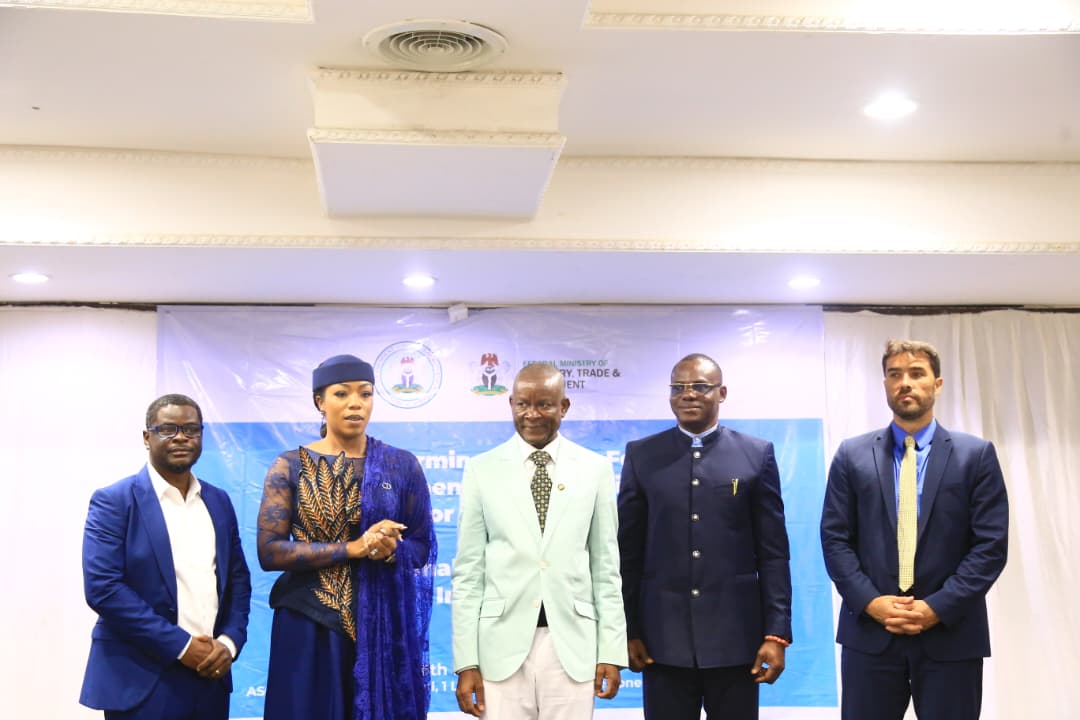
The Honourable Minister of State for Industry, Senator John Owan Enoh, disclosed this on Wednesday, September 16, 2026, at the High-Level Private Sector Roundtable Engagement on Nutrition, held in Abuja under the theme, “Nutrition as a Critical Lever of Nigeria’s Food Industrialization and MSME Competitiveness.”
Senator Enoh said the Federal Government was repositioning nutrition from being viewed primarily as a health or humanitarian concern to recognising it as a critical industrial and economic priority, with significant implications for productivity, enterprise development, domestic manufacturing and national wealth creation.
He said Nigeria’s persistent challenges of undernutrition and micronutrient deficiencies, alongside the growing burden of diet-related diseases, required a coordinated response involving government, manufacturers, farmers, financial institutions, regulators, development partners and communities.
According to him, the private sector must remain at the centre of sustainable nutrition solutions because of its extensive role in producing, processing, packaging, distributing and marketing the food consumed by Nigerians.
The Minister stated that the proposed Unified “Trade” Sector Nutrition Strategic Plan would align with the National Policy on Food and Nutrition 2026–2035, Nigeria Industrial Policy and the Vice President’s Nutrition 774 Initiative, while strengthening collaboration among relevant Ministries, Departments and Agencies.
Senator Enoh highlighted Nigeria’s vast agricultural resources, including cassava, legumes, cocoa, oil palm, cashew and biofortified crops, noting that they provide the raw materials needed to build competitive domestic food industries and produce nutritious, affordable and high-value products.
He called for targeted technical assistance, modern processing equipment and accessible financing to enable MSMEs to scale, while identifying Cluster Facility Centres as important platforms for strengthening capacity in food processing, hygienic handling, packaging and quality standards.
The Minister urged food manufacturers to make nutrition an integral part of their commercial strategies by increasing the use of locally sourced and biofortified raw materials, improving product formulations and expanding the production of affordable fortified foods.
He also called on financial institutions to develop affordable, long-term financing instruments tailored to food-processing MSMEs, while urging development partners and regulatory agencies to strengthen technical assistance, quality assurance, accountability and local procurement.
Senator Enoh stressed that transforming Nigeria’s agricultural resources into industrial value would create stronger markets for farmers, expand opportunities for women and young people, generate employment and strengthen domestic manufacturing.
He emphasised that achieving national nutrition security required an “all-of-government and all-of-society” approach, with stakeholders working together to translate Nigeria’s agricultural potential into commercially viable and nutrition-sensitive industries.
The Permanent Secretary, FMITI, Dr. Chris Osa Isokpunwu, described nutrition as an economic and industrial priority with far-reaching implications for enterprise development, investment, trade, productivity and national wellbeing.
Dr. Isokpunwu stressed that meaningful progress could not be achieved without the private sector, given its investment capacity, innovation, production networks and market reach.
He commended the Office of the Vice President for its leadership of the Nutrition 774 Initiative and acknowledged the support of development partners, including the World Bank, Bill & Melinda Gates Foundation, GIZ, the Embassy of the Kingdom of the Netherlands and the UK FCDO.
The Permanent Secretary said the roundtable was designed to identify opportunities and bottlenecks across the nutrition value chain, map private-sector capabilities and develop practical pathways towards a broader national platform under the MarketFit Nutrition 2035 framework.
He urged stakeholders to move beyond commitments to concrete investments, incentives and measurable interventions, noting that a stronger nutrition ecosystem would create markets for Nigerian farmers, strengthen domestic industries, attract investment, generate jobs and enhance productivity.
The Senior Special Assistant to the Vice President on Nutrition, Mrs. Uju Vanstasia Anwukah, conveyed the greetings of the Vice President and Chairman of the National Council on Nutrition, Senator Kashim Shettima, and commended FMITI for convening the private-sector engagement.
Mrs. Anwukah said nutrition remained a major priority of the Federal Government, stressing that sustainable economic development required a healthy and productive population.
She explained that the Nutrition 774 Initiative provides a governance and accountability framework for addressing malnutrition across Nigeria’s 774 Local Government Areas through coordinated action involving the Federal, State and Local Governments, private sector, development partners and communities.
She noted that malnutrition has implications beyond health, affecting education, workforce productivity, economic growth and national competitiveness.
Mrs. Anwukah therefore called for a new model of private-sector participation in which businesses engage not only through corporate social responsibility and philanthropy, but also as investors, innovators and strategic partners capable of developing sustainable nutrition solutions.
She said the roundtable was expected to generate practical recommendations, clear timelines and an actionable roadmap for strengthening private-sector contributions to the Nutrition 774 Initiative and delivering measurable results.
The Executive Director of the Access to Nutrition Initiative (ATNi), Greg Garrett, called for nutrition to be placed firmly at the centre of Nigeria’s industrial and economic development agenda.
Garrett said tackling malnutrition required coordinated action across the entire food system, from farming and processing to manufacturing, distribution and consumption, involving government, food manufacturers, MSMEs, farmers, financial institutions, regulators, development partners and consumers.
He noted that Nigeria’s vast agricultural resources and large consumer market present significant opportunities for expanding local food processing and value addition, while strengthening linkages between farmers and manufacturers.
According to him, increased local sourcing of agricultural raw materials can stimulate domestic value chains, create markets for farmers, attract investment and generate employment.
He advocated stronger adherence to national and international standards in food production, fortification and quality assurance, stressing that nutritious food must be both commercially viable and accessible to consumers.
Garrett described nutrition as an opportunity to create new markets, strengthen Nigerian enterprises and advance inclusive economic growth.
The high-level engagement brought together government officials, private-sector leaders, manufacturers, financial institutions, regulatory agencies, development partners and technical experts to explore practical strategies for integrating nutrition into Nigeria’s industrial and commercial ecosystem.
The engagement reaffirmed the Federal Government’s commitment to building a stronger and more self-reliant domestic food industry that converts Nigeria’s agricultural wealth into industrial value, expands opportunities for MSMEs, strengthens local production and contributes to improved nutrition, employment and broad-based economic growth.
END

