
Odimmegwa Johnpeter/Abuja
The Federal Government and German Agency for International Development (GIZ) have reaffirmed their commitment to forging stronger partnerships to accelerate the delivery of affordable housing, sustainable urban development and inclusive communities across Nigeria. This was contained in a statement signed by Badamasi S. Haiba, Fsca, mnipr, Director, Press, and Public Relations.
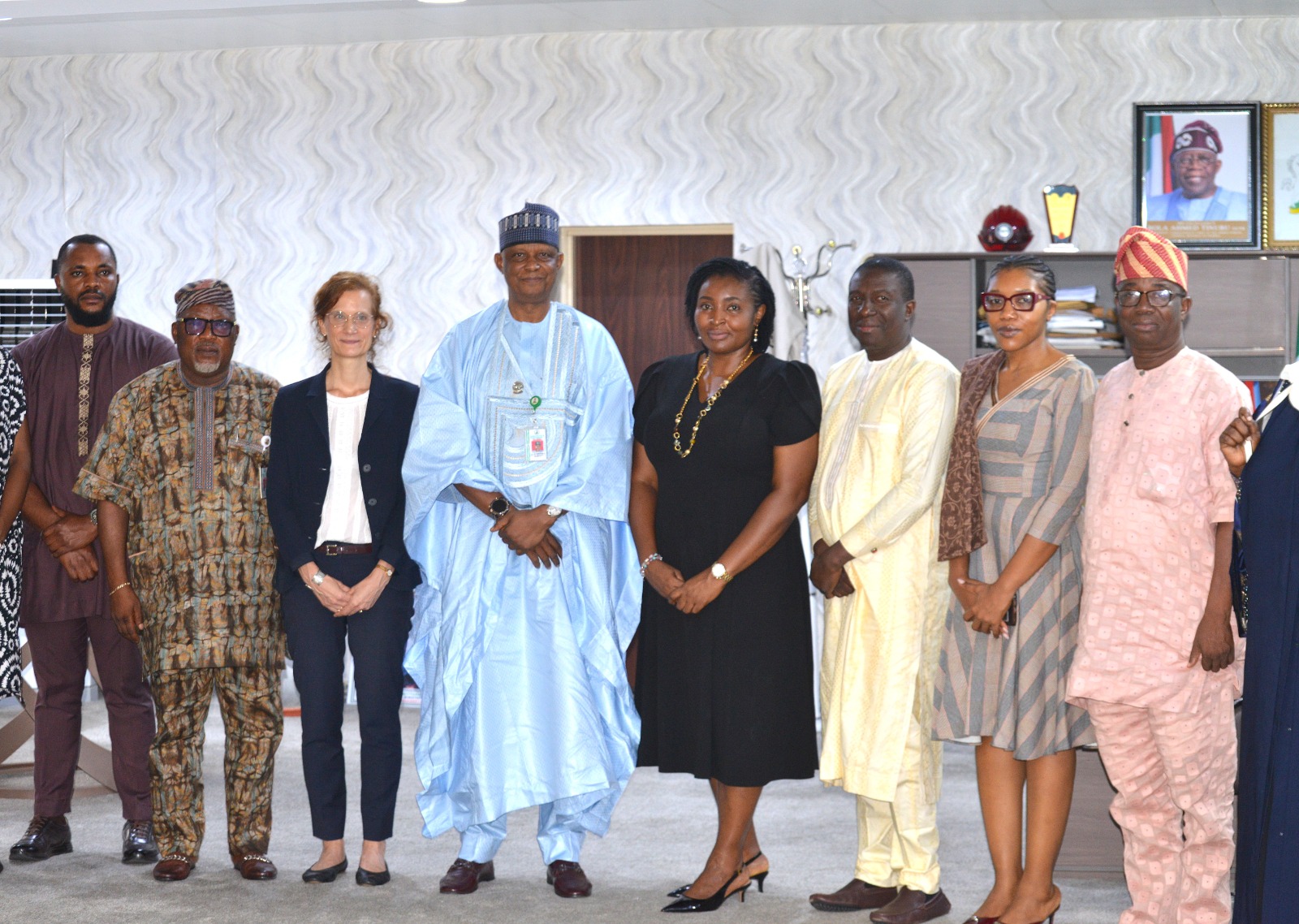
This was the key outcome of the meeting of the Honourable Minister of Housing and Urban Development, Engr. Muttaqha Rabe Darma, with the GIZ team led by Dr. Karin Jansen, in the housing ministry mabushi head office, Abuja Friday, July 10th, 2026
Minister Darna described GIZ as a long-standing and trusted development partner whose technical expertise and global experience would significantly contribute to the actualization of the Ministry’s mandate.
“We need to partner with you to actualize our mandate. The Federal Ministry of Housing and Urban Development is committed to delivering on the Renewed Hope Agenda of President Bola Ahmed Tinubu. We believe that working closely with GIZ will strengthen our capacity to provide affordable housing, promote sustainable urban development and improve the quality of life for Nigerians,” he stated.
The Minister noted that although different statistics exist regarding Nigeria’s housing deficit, the need for decent and affordable housing remains enormous, with millions of Nigerians still without access to adequate shelter.
According to him, the Ministry is determined to ensure that ordinary Nigerians have access to decent homes in line with the Renewed Hope Housing Programme.
“Our vision is to build houses that ordinary Nigerians can afford and proudly call home. Housing is not merely about providing shelter; it is about restoring dignity, promoting social inclusion and stimulating economic growth. With partners like GIZ, we are confident that we can make this vision a reality,” he said.
Providing updates on the Ministry’s ongoing housing programmes, the Minister disclosed that the Federal Government has set a target of delivering 20,000 housing units yearly, adding that 15,000 units are already at various stages of completion across the country.
He further revealed that the Ministry is developing a Social Housing Scheme that will extend affordable housing to every local government area in Nigeria. The initiative, he explained, is specifically designed to provide decent homes for vulnerable and low-income Nigerians, including teachers, primary healthcare workers, persons with disabilities, young families, and Nigerians in the diaspora seeking affordable housing opportunities.
Accordingly, Darma also outlined the Ministry’s ambitious urban renewal programme aimed at transforming Nigerian cities into safer, more resilient and economically vibrant urban centres.
He disclosed that the Ministry plans to commence the transformation of at least three major urban slums into modern, affordable and livable communities before the end of the year, as part of the Federal Government’s broader urban regeneration strategy.
“The future of our cities depends on deliberate planning, sustainable infrastructure and inclusive development. Beyond constructing houses, we are building communities where people can live with dignity, access essential services and enjoy a better quality of life,” he explained
On her part, the head of the German delegation, Head of Cooperation at the Embassy of the Federal Republic of Germany, Dr. Karin Jansen, described the engagement as timely, coming on the heels of the recent Germany–Nigeria Government Negotiations on Development Cooperation, during which both countries reaffirmed their commitment to expanding bilateral cooperation across strategic sectors.
She explained that both governments agreed to deepen collaboration in priority areas including sustainable economic development, skills development and employment, agricultural transformation, health and social protection, peaceful and inclusive societies, climate action and energy transition.
According to Dr. Jansen, these priority areas align closely with the mandate of the Federal Ministry of Housing and Urban Development.
She identified sustainable urban development, integrated urban planning, resilient infrastructure, energy-efficient buildings and climate-resilient cities as key sectors where Germany has developed considerable expertise and where meaningful collaboration with Nigeria can deliver tangible results.
“We see strong linkages between our development priorities and the mandate of your Ministry. Germany has accumulated valuable experience in sustainable urban development, resilient infrastructure and climate-responsive planning. We believe there is significant potential to expand our cooperation and jointly deliver solutions that will improve the lives of Nigerians,” she said.
Earlier welcoming the delegation, the Permanent Secretary of the Ministry, Dr. Shuaib Belgore, expressed appreciation to the German delegation for the visit, describing it as another milestone in the long-standing relationship between Nigeria and Germany.
He noted that deeper collaboration between the Ministry and GIZ would contribute significantly to addressing Nigeria’s housing challenges while supporting the development of inclusive, resilient and climate-smart cities.
“The partnership between the Federal Ministry of Housing and Urban Development and GIZ presents enormous opportunities to bridge Nigeria’s housing deficit, strengthen urban governance and promote sustainable development that benefits all Nigerians,” he said.
The meeting concluded with both parties expressing their commitment to strengthening cooperation through technical assistance, knowledge exchange, institutional capacity building and the development of innovative, sustainable solutions that will accelerate the implementation of Nigeria’s housing and urban development agenda.
The renewed collaboration is expected to further support the Federal Government’s efforts to deliver the Renewed Hope Housing Programme, improve urban infrastructure, enhance climate resilience and create inclusive cities where every Nigerian has access to safe, decent and affordable housing.
END

