
Odimmegwa Johnpeter/Abuja
Federal Government says plans are underway to integrate haemophilia and other inherited bleeding disorders care and services into the maternal and child health services especially at the primary and secondary levels of healthcare in Nigeria to improve early identification of cases and enrolment into the comprehensive care for Inherited Bleeding Disorders. This was contained in a statement signed by Ado Bako, Assistant Director, Information and Public Relations.
The Coordinating Minister of Health and Social Welfare Professor Muhammad Ali Pate disclosed this during a Press briefing to commemorate the 2026 World Haemophilia Day held in Abuja.
Represented by Dr. Kamil Shoretire, Permanent Secretary Designate and Director Health Planning Research and Statistics, the Minister,expressed concern over the prevalence of persons living with haemophilia in Nigeria estimated at 21,101, and only 3% of this population have been diagnosed suggesting a severe problem of under-diagnosis and ineffective management.
He noted that lack of adequate knowledge about haemophilia and the management of this rare bleeding disorder among health care providers is of a serious public health concern and likely to increase morbidity and mortality.
Pate said the theme of 2026 World Haemophilia Day,”Diagnosis: The First Step to Care”. resonates deeply with National Health priorities, adding that it underscores a very significant fact: no patient can receive appropriate care without first being correctly diagnosed.
He emphasized that for haemophilia patients and other inherited bleeding disorders, early diagnosis is the difference between life and preventable complications, between disability and productivity, between despair and hope.
The Coordinating Minister further explained that the event gives a unique opportunity to shed light on transforming care and strengthening diagnosis as the gateway to the entire continuum of care, from treatment and rehabilitation to prevention and long-term management, in addition to empowering individuals and families affected by building strong support networks, promoting awareness and engaging with healthcare providers, policymakers and other stakeholders to advocate for better policies and services.
He announced the launching of the National Bleeding Disorders Registry in Nigeria and added that in recognition of the huge burden of haemophilia in Nigeria, government in collaboration with World Federation of Haemophilia (WFH) and Haemophilia Foundation of Nigeria (HFN) is to officially flag-off the “Road to Clot Initiative” meant to identify undiagnosed persons living with bleeding disorders, link them to diagnosis and treatment centres, and connect them to long-term care.
On the socio-economic and psychological trauma cause due to Haemophilia and Other Inherited Bleeding Disorders, Professor Pate said government through the Federal Ministry of Health and Social Welfare, over the years institute policies and several strategic interventions to address the challenges, among is the
development of a National Guideline for Inherited Bleeding Disorders in Nigeria, for a standardize and uniformity of care across all levels of health care service delivery programme for SCD in Nigeria, respectively.
Others are the establishment of the Multi-sectorial Action Program (MSAP) Technical Committee involving different MDAs in addressing the prevalence of NCDs in Nigeria, adding that advocacy and mass mobilization for awareness creation on Inherited Bleeding Disorders and the importance of genetic counselling and testing commenced in some parts of the country.
He called on stakeholders including the media, civil society, community to make concerted efforts in creating awareness and key into this Initiative so that together to stop this epidemic, noted that this will ensure the reduction in the prevalence of Inherited Bleeding Disorders in Nigeria.
Megan Buckie Adediran, Executive Director, Haemophilia Foundation of Nigeria (HFN) in her goodwill message described the day as a reminder of every journey, silent struggle, victory, and life touched by bleeding disorders, commending healthcare workers and partners, for standing in the gap, for believing that every life matters, and working tirelessly to improve care and access. She noted that collaboratively, Nigeria will be a nation where every person with a bleeding disorder can live a full, healthy, and dignified life.
Also presenting goodwill message, Professor, Theresa Nwagha, Vice President (Medical) Haemophilia Foundation of Nigeria (HFN) said the flag-off of the “Road to Clot: Reaching the Undiagnosed” Program, marks a pivotal moment in Nigeria’s journey toward health equity for those living with rare blood disorders.
She stated that the initiative is designed to be the bridge between silence and science, and its primary objectives include: Community-Based Screening, Enhanced Diagnostic Capacity, and Strengthening the National Registry, aligning with National Health Goals.
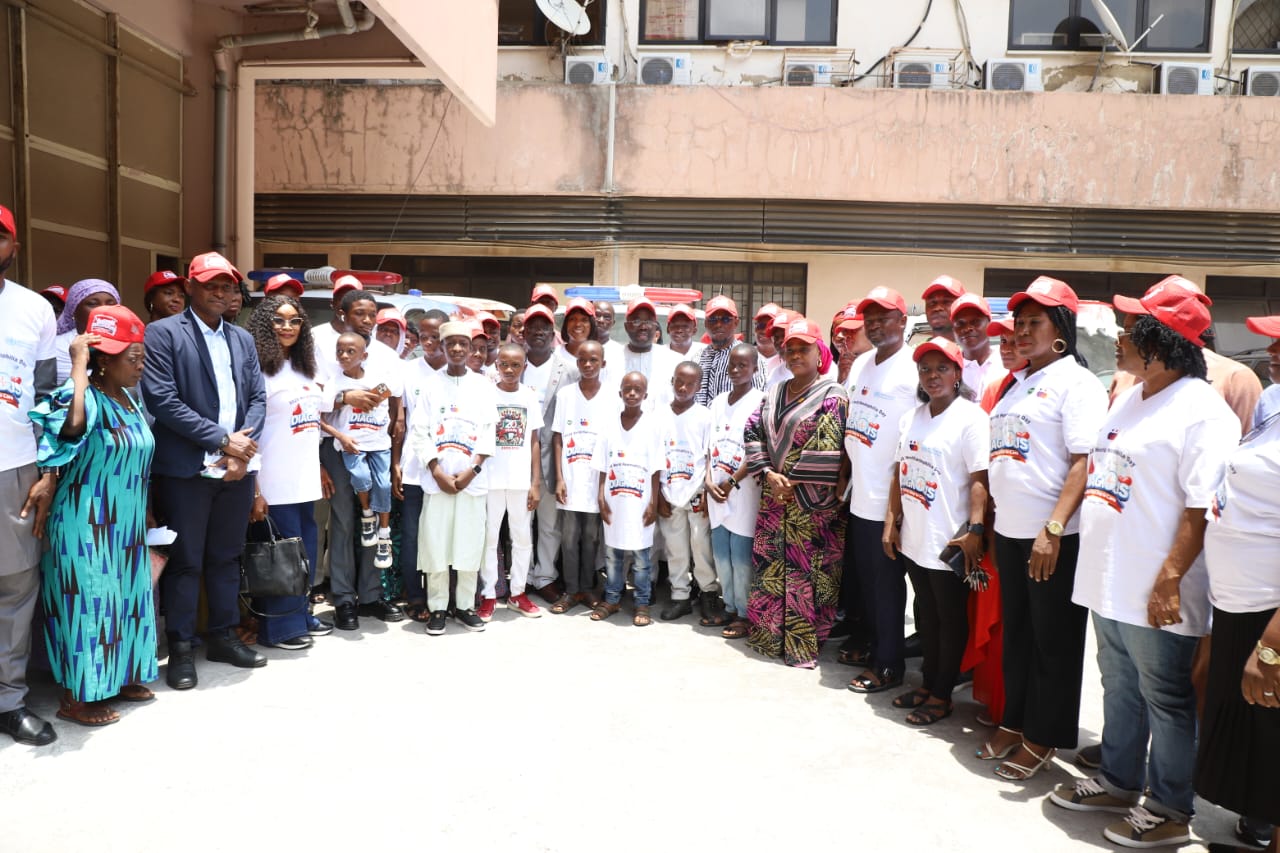
Five ambulances were launched for the flag-off of the “Road To Clot Initiative” signifying effort to get undiagnosed persons living with haemophilia and other bleeding disorder especially at hard to reach areas are traced, diagonized and give care.
END

