
Odimmegwa Johnpeter/Abuja
The Federal Government has unveiled a fresh package of measures to cushion the impact of rising fuel prices on households, transport operators and businesses without returning to a blanket petrol subsidy.
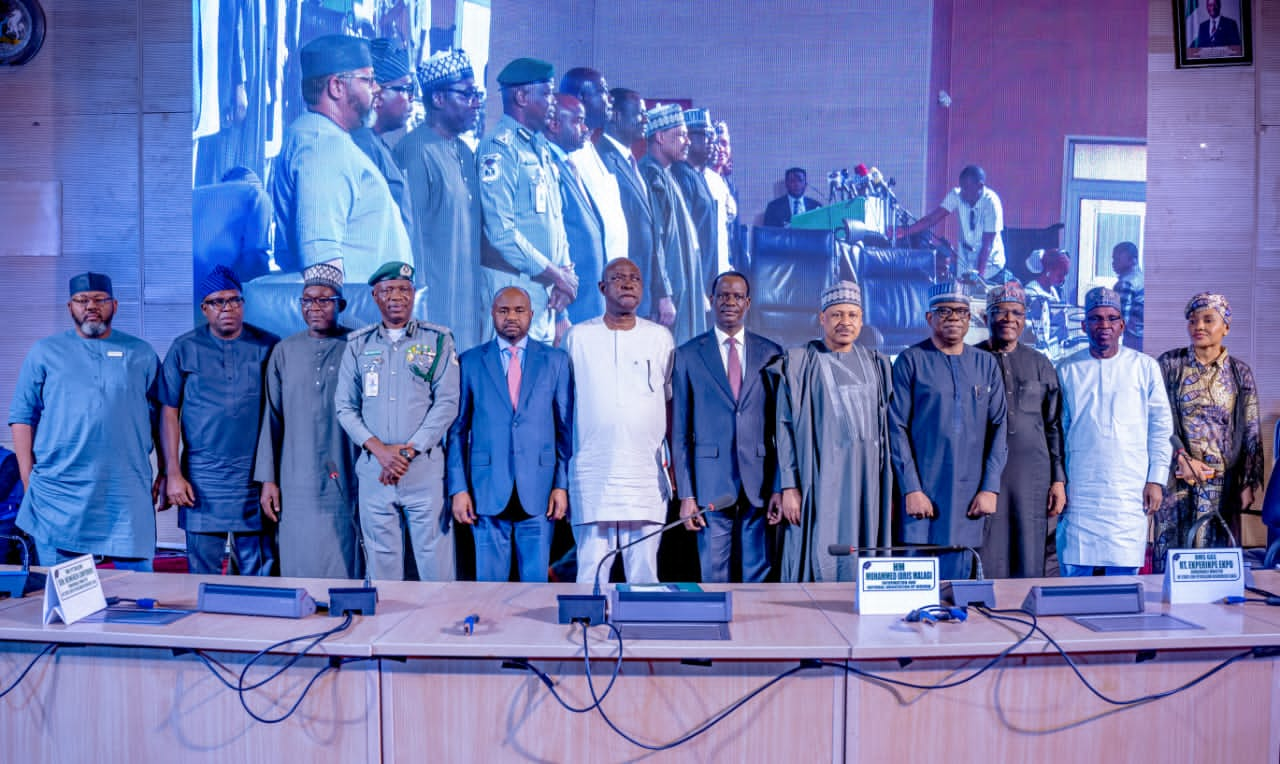
The Minister of Finance and Coordinating Minister of the Economy, Professor Taiwo Oyedele, stated this on Thursday during a press briefing on fuel prices and the subsidy question at the Federal Ministry of Finance headquarters in Abuja.
The interventions include a 30-day margin discount at NNPC Limited stations, forward sales of crude to domestic refineries, a proposed N1,350 per litre ceiling on the ex-gantry or landing cost of petrol, increased cash transfers, subsidised credit and accelerated deployment of compressed natural gas (CNG).
Others are the removal of illegal levies, consideration of an excess profit tax on operators taking undue advantage of consumers, reduction of regulatory costs and the establishment of a National Strategic Fuel Reserve.
Oyedele said the government recognised that the measures already introduced had not completely eliminated the pressure being experienced by households.
His words: “We recognise that these measures, important as they are, do not fully relieve the pressure households feel today. So the government is taking further steps,”
According to Oyedele, under the first intervention, NNPC Limited would offer a margin discount on petrol sold through its stations for the next 30 days, with public transport operators to receive priority.
He said the discount was intended to provide immediate relief while avoiding a return to the costly subsidy regime.
The minister also announced plans for forward sales of crude to domestic refineries as production increases and previously committed crude becomes available.
According to him, the arrangement would shield domestic petrol prices from excessive volatility in international crude markets.
On price stability, Oyedele said the government was negotiating a ceiling of N1,350 per litre on the ex-gantry or landing cost of petrol.
He explained that where market costs rise above the ceiling, refiners and importers would carry the shortfall and recover it later when crude prices or the exchange rate improve.
He stressed that the mechanism was neither a subsidy nor price control, but an attempt to smooth price movements and reduce uncertainty for consumers and businesses.
Oyedele further stated that the ceiling would be reviewed monthly and the relevant figures published for transparency.
He also added that the government was also working with states to eliminate illegal road taxes and levies that increase transport and logistics costs.
He said funding for cash transfers to vulnerable households and subsidised credit for small businesses and consumers would be increased.
On alternative energy, Oyedele disclosed that more than 120,000 vehicles were already operating on CNG, supported by over 400 conversion centres, 96 refuelling stations, and 18 L-CNG stations.
He said more than 550 CNG buses had also been deployed, with fares falling by between 30 and 50 per cent where the buses operate.
According to him, the government had removed taxes on electric vehicles and solar equipment and reduced import duties on vehicles, while Customs data showed that imports of CNG-powered vehicles, electric vehicles and renewable energy equipment had more than doubled since May 2023.
He said the associated duty waivers had exceeded N100 billion.
Oyedele further announced that the government would consider an excess profit tax on businesses along the energy value chain that exploit consumers during the current period of price pressure.
He said proceeds from the proposed measure would be dedicated to cushioning the impact of fuel prices through transport support or vouchers for vulnerable urban minimum-wage earners.
The minister also said the Federal Government would work with the National Assembly to consider enhanced tax relief for low-income earners under the 2027 Finance Bill.
Another major intervention is the planned National Strategic Fuel Reserve, which Oyedele said would help Nigeria respond to future global energy shocks.
He explained that refined products would be released into the market under clear and published rules whenever global disruption, hoarding or artificial scarcity threatened supply and price stability.
“This is not a subsidy and it does not fix prices, rather it secures supply and reduces price volatility,” he said.
Oyedele said the government was also working to reduce regulatory costs and improve traffic and logistics management, noting that congestion increased fuel consumption and raised the cost of transporting goods.
He also cited NIPOST’s newly launched address codes as a factor that could also contribute to more efficient and cheaper logistics.
Earlier, the Permanent Secretary of the Federal Ministry of Finance said the engagement was designed to move government agencies from being “gatekeepers” to “enablers” of economic activity.
He said regulation, accountability and controls remained necessary but should not become obstacles to businesses and citizens.
The Permanent Secretary urged agencies to identify overlapping mandates, simplify approval processes and improve communication of policy changes to create a more predictable and investment-friendly environment.
He said the objective was not to assign blame but to identify what was not working, establish responsibilities and agree on timelines for reform.
Speaking on the economic reforms, the Minister of Information and National Orientation, Mohammed Idris, said the government was determined to move from reform to prosperity and ensure that the benefits of economic reforms reached ordinary Nigerians.
Idris urged the media to play its role by interpreting policies, interrogating facts and helping Nigerians understand both the progress being made and the challenges that remain.
The Minister of State for Petroleum Resources, Senator Heineken Lokpobiri, meanwhile, urged Nigerians to appreciate the long-term benefits of subsidy removal, arguing that the policy had created room for increased private investment in domestic refining.
He cited the Dangote refinery and its planned expansion as examples of investments that would have been difficult to achieve under a system dominated by government-controlled fuel imports and subsidies.
The government said its approach would continue to focus on targeted, temporary and fiscally sustainable relief rather than a blanket subsidy that could undermine the broader economy.
END

