
Odimmegwa Johnpeter/Abuja
The Federal Government has called for stronger alignment between development partners’ interventions and Nigeria’s national development priorities to ensure greater impact, sustainability, and measurable outcomes, as the Korea International Cooperation Agency (KOICA) and the Food and Agriculture Organisation of the United Nations (FAO) prepare to implement a new multi-bilateral agricultural project in Nigeria.
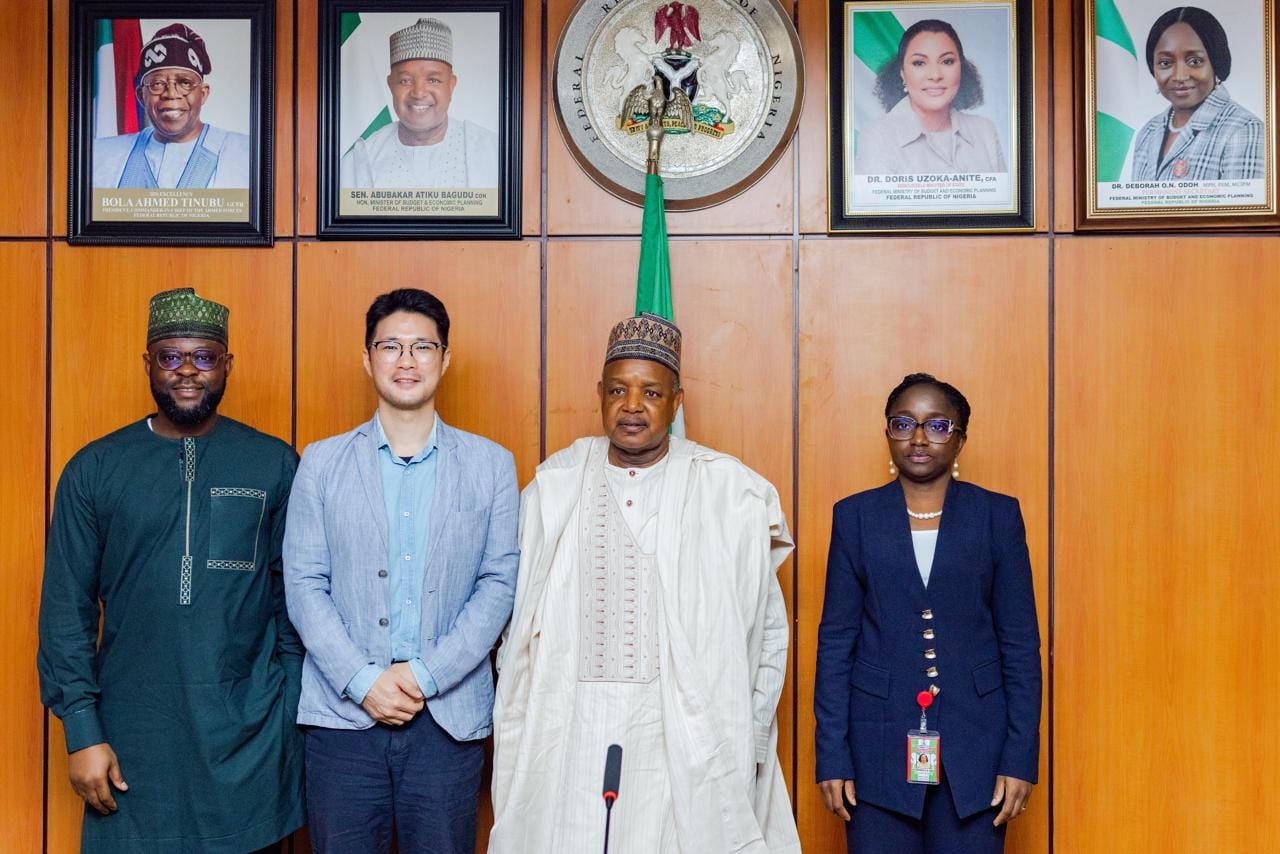
Minister of Budget and Economic Planning, Senator Abubakar Atiku Bagudu, made the call on Wednesday during a courtesy visit by KOICA officials to brief the Ministry on the KOICA-FAO 2026 Multi-Bilateral Project, which aims to promote resilient agricultural systems and create green jobs for youth in Nigeria and other participating African countries.
While appreciating the longstanding partnership between Nigeria and the Korean government through KOICA, Senator Bagudu stressed the importance of designing development programmes that are focused, measurable, and capable of delivering scalable results.
He noted that Nigeria’s relationship with Korea offers valuable lessons, given Korea’s remarkable transformation from an agricultural economy to a major global economic player.
“Beyond the support we receive, there is much Nigeria can learn from Korea’s experience, particularly in agriculture, food production, value addition, and export development,” the minister said.
Senator Bagudu, who explained that the Federal Ministry of Budget and Economic Planning is responsible for coordinating national development planning and partnerships, emphasised that development partners’ interventions must align with Nigeria’s development framework, including the country’s long-term vision under Agenda 2050.
He noted that Nigeria’s federal structure, with responsibilities shared among federal, state, and local governments, makes coordination essential to achieving sustainable development outcomes.
The minister encouraged KOICA and FAO to adopt a more targeted approach, focusing interventions on specific communities where results can be measured and replicated.
According to him, spreading projects too widely without sufficient depth may limit their effectiveness, whereas focused interventions can produce successful models that attract further investment and expansion.
“We need programmes that can produce concepts that work, can be scaled, and can attract the private sector,” he said.
Senator Bagudu emphasised the importance of aligning agricultural interventions with the economic realities and priorities of beneficiary communities.
He cited Nasarawa State as an example, noting that women rice farmers and processors who have struggled to compete with large-scale milling operations could benefit from improved technology, skills development, and stronger market access.
He also highlighted opportunities in Bayelsa State, particularly in aquaculture, where targeted support could unlock significant economic potential and promote sustainable production.
The minister stressed that empowering farmers requires more than production support; they must also be equipped with knowledge of market demands, value addition, and globally competitive agricultural practices.
He noted that Nigeria has significant opportunities in commodities such as sesame, cocoa, fisheries, and other high-value agricultural products, and added that the country’s farmers should be supported in accessing international markets.
“Sometimes, what is needed is to teach people what the world requires — to help them move from traditional production to producing what the market values,” Senator Bagudu said.
He further urged KOICA and FAO to integrate their intervention with existing government programmes, including the Renewed Hope Ward Development Programme, which aims to coordinate development activities across Nigeria’s 8,809 wards.
The minister explained that a ward-based approach would help prevent project duplication, improve stakeholder coordination, and ensure that interventions address the specific needs of communities.
Earlier, the Senior Deputy Country Director of KOICA, Mr Baik Ki-Hyun, disclosed that the project had been approved by KOICA’s headquarters and would run from 2026 to 2030.
He explained that the initiative followed extensive consultations, surveys, and assessments carried out with FAO, external experts, and relevant Nigerian authorities.
According to him, FAO will serve as the implementing partner, while KOICA will oversee project management, monitoring, evaluation, and assessment of the programme’s outcomes.
The Permanent Secretary of the Federal Ministry of Budget and Economic Planning, Dr Deborah Odoh, welcomed the KOICA delegation and expressed appreciation for Korea’s continued partnership with Nigeria, noting that the intervention would contribute to economic growth, improved livelihoods, and sustainable agricultural development.
The KOICA-FAO project is expected to strengthen agricultural resilience, create employment opportunities for young Nigerians, support inclusive growth, and deepen cooperation between Nigeria and Korea to achieve shared development objectives.
END

