
Odimmegwa Johnpeter/Abuja
The Head of the Civil Service of the Federation (HCSF), Mrs. Didi Esther Walson-Jack, OON, mni, has called for a results-driven Federal Civil Service Strategy and Implementation Plan 2026–2030 (FCSSIP30) that will strengthen institutional performance, accelerate transformation and deliver greater value to Nigerians, as the co-creation process for the Strategy gets underway. This was contained in a statement signed by Mrs. Eno Olotu, FCAI, mnipr, Director, Information and Public Relations.
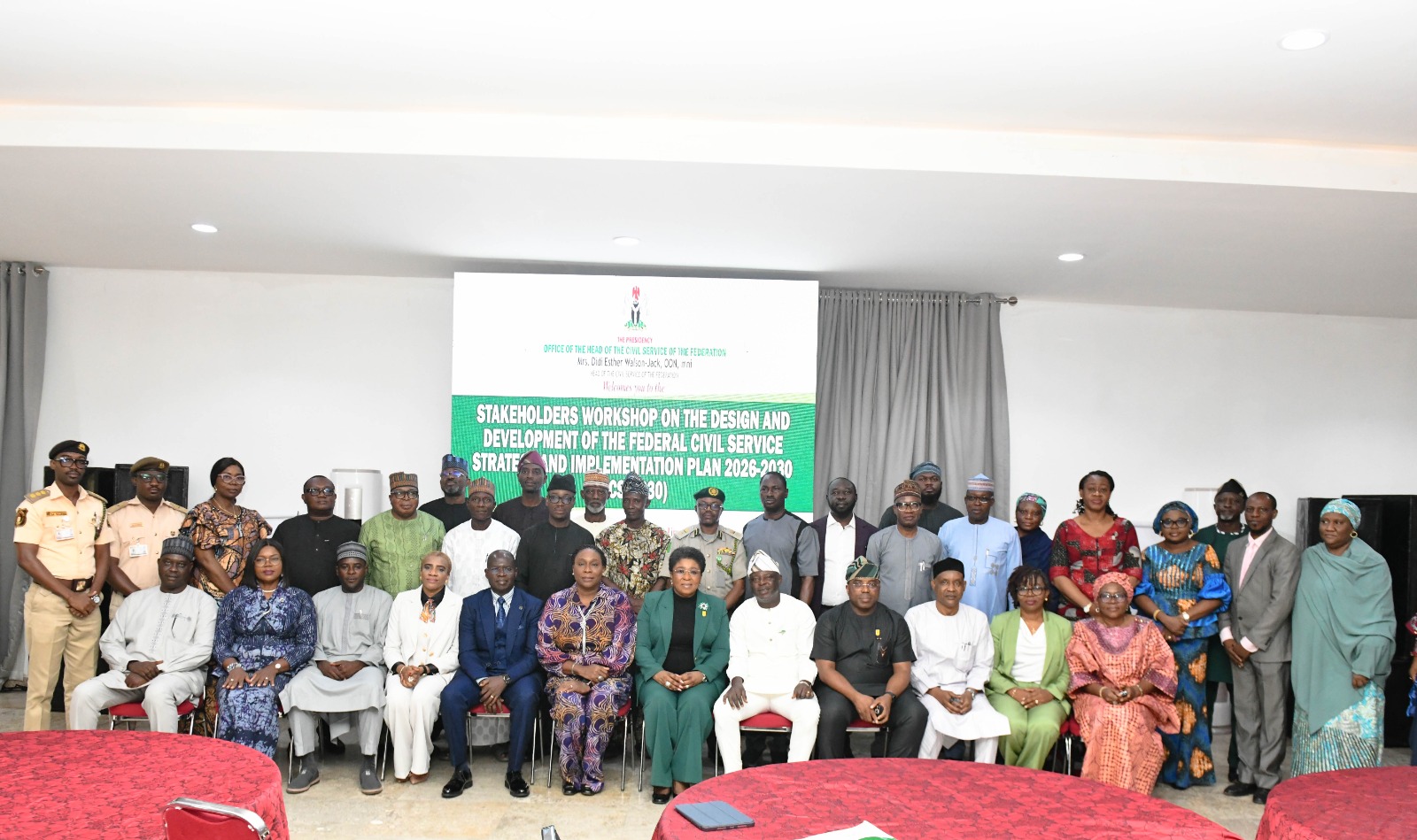
The HCSF made the call on Thursday in Abuja while declaring open a Stakeholders’ Workshop for Directors-General and Heads of Federal Government Agencies and Parastatals on the design and development of FCSSIP30.
Mrs. Walson-Jack described the engagement as a critical step in the stakeholder consultation process following the End-Term Review of the Federal Civil Service Strategy and Implementation Plan 2021–2025 (FCSSIP25), noting that the lessons from the review would provide a strong foundation for shaping the next phase of public service reform.
She stressed that the development of FCSSIP30 could not be undertaken by the Office of the Head of the Civil Service of the Federation (OHCSF) alone, but must be co-created by those who lead institutions, manage people and are responsible for delivering services to citizens.
According to her, the active participation of Agencies and Parastatals is essential to ensuring that the Strategy reflects the realities of implementation and secures the institutional ownership required to achieve sustainable results.
The HCSF challenged participants to critically reflect on the implementation of FCSSIP25 and identify what worked, what did not, and the barriers that constrained progress, urging them to propose practical solutions that could strengthen the next phase of reform.
She emphasised that FCSSIP30 must move beyond policy aspirations to measurable implementation, institutional accountability and tangible outcomes, with a strong focus on building a Public Service that attracts and retains talent, rewards excellence, embraces innovation and technology, and delivers more effectively to citizens.
Mrs. Walson-Jack also underscored the importance of deepening digital transformation across the Public Service, noting that platforms such as the Enterprise Content Management System (ECMS) and Service-Wise GPT are part of the emerging digital ecosystem designed to improve efficiency, productivity and access to institutional knowledge.
“We are not here to defend the past; we are here to design a better future,” the HCSF stated, calling for collective commitment to a Public Service that is more efficient, innovative, responsive and trusted by Nigerians.
In his welcome remarks, the Permanent Secretary, Service Policies and Strategies Office, Dr. Ishiyaku Musa Muhammed, described the development of FCSSIP30 as an important milestone in Nigeria’s public service reform journey and an opportunity to identify critical gaps for the next phase of re
He said the End-Term Review of FCSSIP25 provided an opportunity to assess progress across the six strategic reform pillars, identify critical gaps and draw lessons for the next step of reform.
The workshop brings together key institutional stakeholders, including Directors-General and Heads of Federal Government agencies and parastatals. Similar workshops have also been organised for officers on SGL 9–14 and 15–17, as well as Directors responsible for Human Resources, Reform Coordination and IPPIS, and representatives of Labour Unions.
The stakeholder engagement will further extend to serving Permanent Secretaries, retired Heads of Service and Permanent Secretaries, Development Partners, the Private Sector and Civil Society Organisations, ensuring broad-based participation and diverse perspectives in the development of the Strategy Plan.
END

