
Odimmegwa Johnpeter/Abuja
The Director of Free Movement of Persons and Migration for the ECOWAS Commission, Albert Siaw-Boateng has called on member states to fully enforce treaties regarding labor mobility, describing them as essential catalysts for regional integration and the success of the African Continental Free Trade Agreement (AfCFTA).
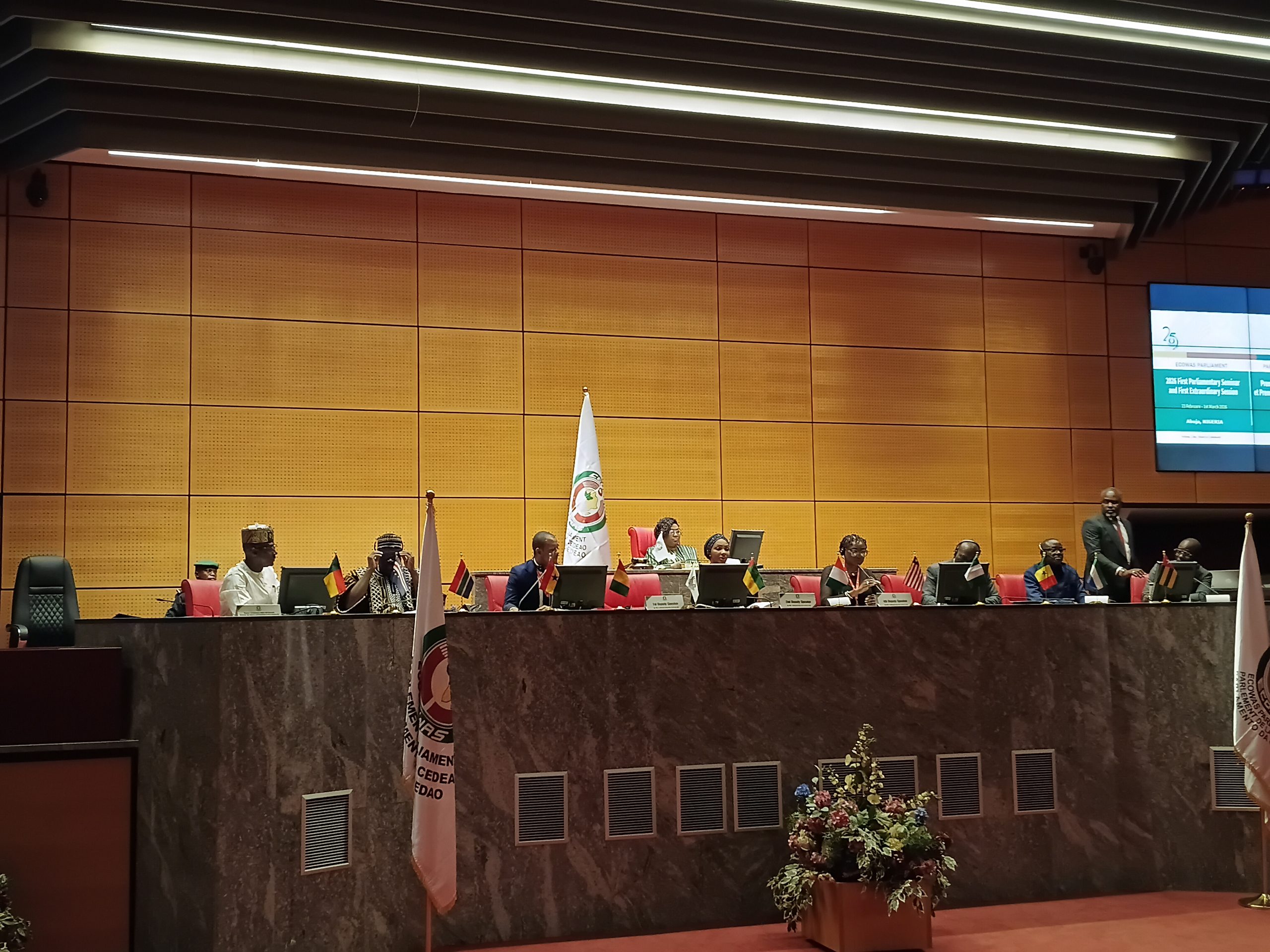
Speaking Tuesday at an ECOWAS Parliament session in Abuja, Siaw-Boateng expressed concern that the 1979 treaty—which guarantees the rights of entry, residence, and establishment—remains poorly enforced despite being aligned with the goals of the AfCFTA.
Barriers to Integration
In a presentation titled “Free Movement of Persons and Labour Mobility as Catalysts for Regional Integration and AfCFTA Success,” the Director highlighted several factors stalling progress, including:
Data fragmentation and a lack of information sharing between nations.
Weak enforcement of existing protocols.
Skills mismatches and gaps in rights protection for migrant workers.
High levels of informality in cross-border trade.
Siaw-Boateng noted that while the “right of residence” has been implemented—allowing citizens to work in other member states via immigration cover (excluding the military and police)—other critical tools are being ignored. Specifically, he lamented the slow adoption of the ECOWAS National Biometric Identity Card.
The Identity Card Challenge
Launched in 2018 to replace handwritten travel certificates, the biometric ID card has only been deployed by seven member states: Senegal, Guinea-Bissau, Ghana, Benin, The Gambia, Sierra Leone, and most recently, Nigeria.
”We member states are the killers ourselves,” Siaw-Boateng said, pointing out that even among those who have deployed the card, it is often not accepted as a valid travel document at borders. He urged lawmakers to advocate for its acceptance, noting that 85% to 90% of community citizens travel within the region rather than abroad, making a cheap, accessible ID card vital for the masses.
Security and Future Policy
To address security concerns and data silos, Siaw-Boateng proposed that member states utilize the West African Police Information System (WAPIS), which was handed over to ECOWAS in April 2025. He argued that integrating immigration data into WAPIS would facilitate easier and more secure data exchanges.
The Commission is also working on a regional migration policy, validated in May 2025, that links migration to socio-economic development. This includes efforts to:
Harmonize driver’s licenses across the region to allow seamless travel.
Reduce harassment and exploitation of interstate passenger vehicles at borders.
Address labor shortages by preserving the rights of mobile workers.
Siaw-Boateng concluded by calling for “parliamentary leadership” to drive policy coherence, asserting that regional productivity and the broader success of the AfCFTA depend entirely on the ability of people and labor to move freely across borders.
END

