
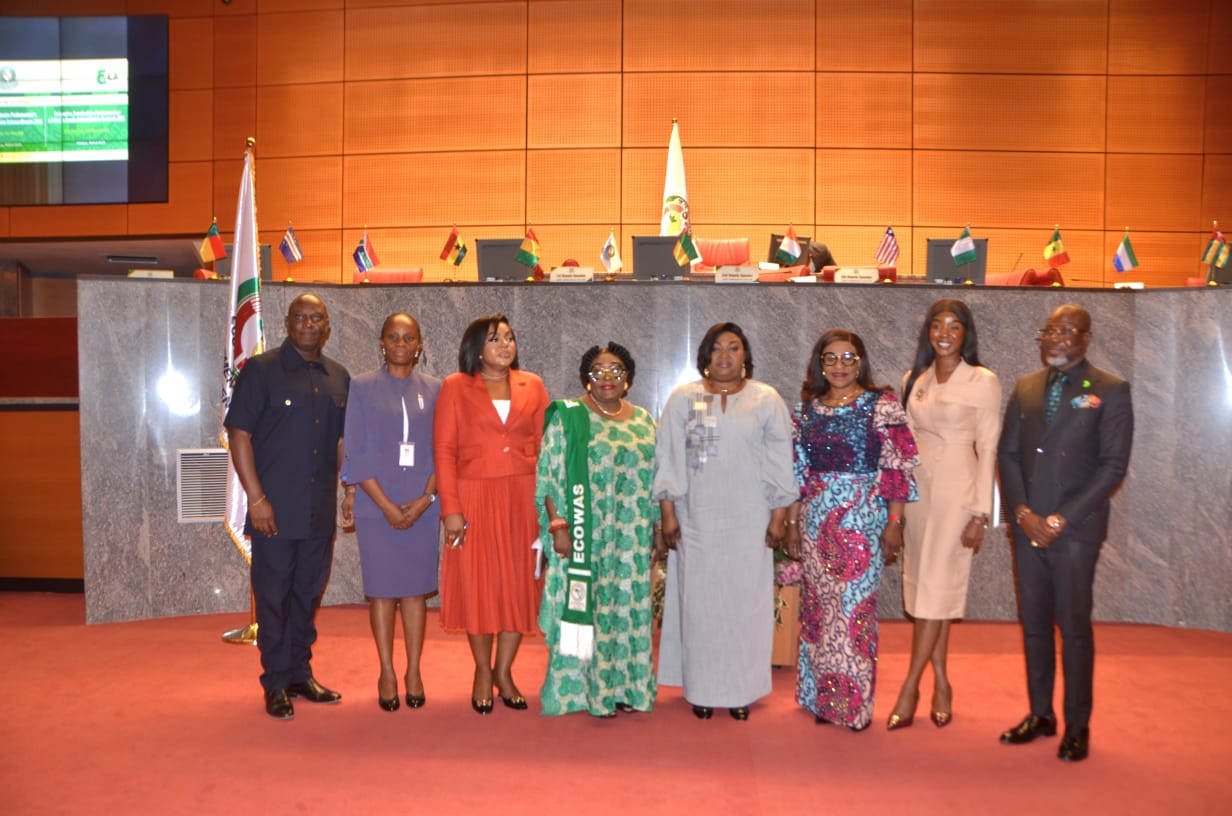
Odimmegwa Johnpeter/Abuja
The ECOWAS Commission has revealed that women dominate informal cross-border trade in West Africa, accounting for 74 per cent of operators,
youths under 25 also form a critical part of the sector.
The Director at the ECOWAS Commission Trade Directorate,
Christopher Mensah-Yawson, stated this at the ECOWAS Parliament Extraordinary Session and Parliamentary Seminar in Abuja, noting that these barriers must be removed if the African Continental Free Trade Area (AfCFTA) is to deliver inclusive and sustainable economic growth.
His words: “Women and youth face multiple challenges, including complex customs procedures, limited awareness of trade regimes, inadequate access to finance and storage facilities, gender-insensitive border infrastructure, harassment, extortion, and security risks.”
“Our population exceeds 456 million, nearly half are women, and the median age is 18.2 years. These are enormous opportunities, but also serious challenges for integration and development.”
According to the ECOWAS official, AfCFTA is a platform for inclusive trade, pointing to provisions such as the Protocol on Women and Youth in Trade, simplified trade regimes, digital trade frameworks, and SME support programmes.
He also stressed that ECOWAS initiatives aimed at empowering women and youth include; the Informal Trade Regularization Support Programme, the Trade and Gender Framework (2024–2030), the Regional E-Commerce Strategy, and digital skills training for rural women. Partnerships with Ecobank and the International Trade Centre are strengthening women-led businesses and youth entrepreneurship.
“Member States must accelerate reforms to formalise informal trade, protect vulnerable traders, and remove structural barriers to formal markets. Women and youth are central to economic resilience, food security, and sustainable development in West Africa, ” he also stated.
The seminar, part of the broader Extraordinary Session of the ECOWAS Parliament, brought together lawmakers, regional institutions, development partners, and trade experts to explore strategies for expanding intra-regional trade and ensuring AfCFTA benefits all segments of society.
Officials stressed that informal trade, though often overlooked in statistics, sustains millions of households, especially in border communities, and is essential for food security, market stability, and regional connectivity.
“The future of West Africa’s trade depends on making AfCFTA work for those historically excluded from formal markets,” Mensah-Yawson added, calling for gender-responsive, youth-friendly, and inclusive policies across the region.
END

