
By Abdulkadir Ibrahim
The recent spate of building collapses in parts of Nigeria has once again brought the issue of structural safety, regulatory compliance, and disaster preparedness to the forefront of national attention.
Each building collapse is more than a structural failure. It is a painful reminder of the potentially devastating consequences of poor compliance with building standards, inadequate monitoring, unsafe construction practices, and delayed intervention.
In the midst of these incidents, the role of the National Emergency Management Agency (NEMA) remains critical—not only in responding when disasters occur, but also in strengthening systems and partnerships designed to reduce disaster risks before they translate into loss of lives and property.
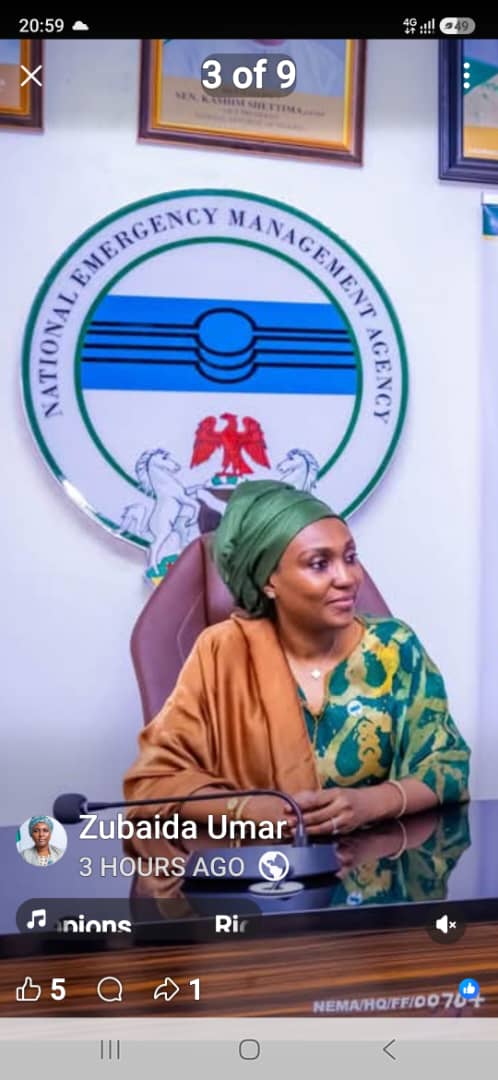
Under the leadership of the Director-General, Mrs. Zubaida Umar, NEMA, has continued to emphasize a broader approach to disaster management that places emergency preparedness, coordination, prevention, public sensitization, and disaster risk reduction alongside search and rescue operations.
BEYOND EMERGENCY RESPONSE
When a building collapses, the immediate priority is to save lives. Emergency responders must quickly secure the scene, search through debris, rescue survivors, recover victims, and coordinate medical and humanitarian assistance.
NEMA has continued to activate its emergency response mechanisms following reports of building collapse incidents, working with relevant government institutions and first responders to support search and rescue operations, coordinate interventions and assess the needs of affected communities.
Recent responses have again demonstrated the importance of having emergency agencies that can rapidly mobilise personnel, equipment, and relevant stakeholders when lives are at risk.
But, effective disaster management can not end when the rubble has been cleared.
Under Mrs. Zubaida Umar’s leadership, the larger objective, is to strengthen a system in which prevention and preparedness complement emergency response.
SHIFTING THE FOCUS TO PREVENTION
Building collapses require a comprehensive approach because the causes and consequences extend beyond the immediate emergency.
Regulatory authorities, state and local governments, construction professionals, developers, contractors, property owners, community leaders, and citizens all have responsibilities in ensuring that structures are properly designed, constructed, monitored, and maintained.
This makes stakeholder engagement an important component of disaster risk reduction.
NEMA continues to promote collaboration with relevant institutions and stakeholders while advocating improved compliance with building standards, responsible construction practices, effective monitoring, and stronger safety enforcement.
The underlying message is that disaster risk reduction can not be the responsibility of one agency alone.
A safer built environment requires collective commitment and accountability from everyone involved in the construction and occupation of buildings.
PUBLIC AWARENESS AS A LIFESAVING TOOL
Another critical component of disaster risk reduction is public sensitization.
Communities and individuals can play an important role in preventing avoidable disasters by recognising warning signs, reporting unsafe structures, and avoiding practices that expose people to unnecessary risks.
Public awareness can, therefore, serve as an early line of defence.
An informed citizen who reports a visibly compromised structure or draws attention to dangerous construction practices could potentially help authorities intervene before tragedy occurs.
For this reason, sustained public education remains essential to building a culture in which safety is treated as a shared responsibility rather than an afterthought.
RECENT COLLAPSES AS A NATIONAL WAKE-UP CALL
The recent building collapses should serve as a national clarion call for stronger enforcement of safety standards and greater responsibility across the built environment.
Development must never come at the expense of human lives.
Contractors, developers, and professionals must adhere to approved standards, while regulatory authorities must ensure that compliance is effectively monitored and enforced. Citizens, too, must be encouraged to report structures and practices that pose obvious risks.
The cost of prevention is invariably measured against the human and economic consequences of disasters that could have been avoided.
STRENGTHENING A CULTURE OF RESILIENCE
The leadership of Mrs. Zubaida Umar at NEMA represents a continued emphasis on building a more proactive disaster management system—one in which emergency response is strengthened by prevention, preparedness, coordination, and partnership.
The agency’s responsibilities in the face of disasters are extensive, but its effectiveness ultimately depends on the strength of the network around it.
From emergency responders and security agencies to state authorities, professional bodies, communities, and individual citizens, every stakeholder has a role to play.
Building resilience, therefore, requires more than responding effectively after disaster strikes. It requires identifying risks, preparing communities, strengthening institutions, and taking preventive action before emergencies occur.
THE WAY FORWARD
As Nigeria confronts the recurring challenge of building collapses, national attention must extend beyond the dramatic scenes of rescue operations to the underlying factors that make such tragedies possible.
The speed and effectiveness of emergency response remain vital. However, the ultimate goal of disaster management should be to prevent avoidable disasters and minimise their impact when they occur.
The recent incidents offer a clear message: safer buildings require stronger regulation, responsible professionals, effective monitoring, informed citizens, and sustained collaboration.
Through continued coordination between NEMA and its partners, Nigeria can strengthen its culture of preparedness and resilience while making disaster prevention an increasingly central pillar of national public safety.
The true measure of disaster management is, therefore, not only how quickly a nation responds when tragedy strikes, but how effectively it works together to ensure that avoidable tragedies do not happen in the first place.
END

