
Odimmegwa Johnpeter/Abuja
The Federal Government has ramped up actions on policy implementation to improve access and quality of maternal healthcare in Nigeria. It further reiterated its commitment to improving maternal and newborn health outcomes with renewed emphasis on quality, equity, and timely access across Nigeria.
Professor Ali Pate, the Coordinating Minister of Health and Social Welfare, stated this at the commemoration of Safe Motherhood Day 2026, saying this year’s theme, “Closing the Gap: From Coverage to Quality Care for Every Mother,” underscores the urgent need to move beyond access and ensure that every woman receives effective and life-saving care.
According to the Minister, who was represented by the permanent secretary of the ministry, Daju Kachollom, while Nigeria has recorded progress in expanding maternal health services, significant gaps remain in the quality and timeliness of care, particularly for vulnerable populations.
He said a major highlight of the government’s efforts is the implementation of the Maternal and Neonatal Mortality Reduction Innovation and Initiative (MAMII), which is now operational in 32 states.
This initiative focuses on data-driven interventions to address the leading causes of maternal and neonatal deaths while strengthening service delivery, referral systems, and emergency obstetric care.
He disclosed that the National Health Insurance Authority (NHIA) is expanding financial access to Comprehensive Emergency Obstetric and Newborn Care services, ensuring that cost does not prevent women from accessing life-saving treatment.
According to Pate, Since the programme’s launch, over 32,000 women and 1,700 newborns have benefitted, with more than 250 health facilities currently participating nationwide.
The Minister also highlighted improvements in emergency medical response through the National Emergency Medical Services and Ambulance System (NEMSAS) and the Rapid Emergency Services and Maternal Transport (RESMAT) programme.
In addition, he noted that services are active in 136 of the 172 MAMII local government areas, supported by 612 ambulances deployed across 340 LGAs.
He revealed that nearly 79,000 beneficiaries have been transported under the programme so far, with pregnant women accounting for about 60 per cent of cases—demonstrating its impact in reducing delays in accessing skilled care.
Similarly, he stated: “The government reported a 20 per cent increase in antenatal care attendance in MAMII-supported areas, alongside the identification and linkage of over 166,000 previously unregistered pregnant women to healthcare services across eight states”.
To ramp up and strengthen service delivery, the Minister said over 111,000 mama kits have been distributed nationwide, with additional supplies underway. Essential maternal and newborn health commodities have also been delivered to hundreds of primary healthcare centres, reaching an estimated 1.2 million women and newborns.
On human resource development, “more than 2,000 skilled birth attendants and 3,000 community health workers have been recruited across several states to improve access to quality care at the grassroots”.
The Minister further announced the introduction of key policy and service delivery tools, including the Obstetrics Clinical and Newborn Service Protocol, Life Saving Skills and Expanded Life Saving Skills packages, revised Antenatal Care Guidelines, the Maternal and Newborn Product Introduction Plan, and the MAMII Comprehensive Guide.
He explained that these instruments are designed to standardize care, enhance the capacity of health workers, strengthen supply chains, and improve coordination across all levels of the health system.
Describing the interventions as a shift toward a more coordinated, systems-based approach, the Minister stressed that safe motherhood can only be achieved through strong and functional health systems.
He therefore called on state governments, healthcare workers, communities, and development partners to sustain collaboration and scale up ongoing interventions.
“Every maternal death is preventable and unacceptable,” he said, urging stakeholders to translate commitments into concrete actions that will ensure no woman dies from pregnancy-related causes.
The Minister reaffirmed the government’s resolve to close existing gaps, strengthen healthcare systems, and guarantee that every Nigerian woman has access to quality, life-saving maternal care.
Earlier, in a welcome remarks, the permanent secretary of the ministry, who was represented by the permanent secretary designate reaffirmed the commitment of the federal government to improving maternal and newborn health outcomes, with a renewed focus on delivering quality care across Nigeria.
According to the Permanent Secretary, while Nigeria has recorded significant progress in expanding maternal health service coverage over the years, access alone does not guarantee improved outcomes.
She noted that timely, skilled, and compassionate care remains the defining factor in reducing maternal and newborn mortality.
She outlined several strategic interventions being implemented by the Ministry to strengthen both access and quality of care. These include the Maternal Mortality Reduction Innovation Initiative (MAMII), which adopts data-driven approaches to address maternal deaths in high-burden areas, and the National Emergency Medical Service and Ambulance System (NEMSAS), designed to improve referral systems and ensure prompt response to obstetric emergencies.
The Permanent Secretary also disclosed that the Ministry is advancing the empanelment of healthcare facilities to provide Comprehensive Emergency Obstetric and Newborn Care (CEmONC) services, ensuring that more facilities are equipped to handle life-threatening complications during pregnancy and childbirth.
In addition, she said efforts to expand health insurance coverage are helping to reduce financial barriers to accessing skilled care, while ongoing reforms in the community health workforce are bringing essential services closer to grassroots communities and strengthening the continuum of care.
He described these initiatives as part of broader efforts to build a resilient health system capable of delivering quality outcomes for every mother and child.
The Permanent Secretary noted that the Safe Motherhood Day commemoration provides an important platform to reflect on progress, share experiences, and mobilize collective action among stakeholders, including government agencies, development partners, civil society, and local communities.
He appreciated the continued support of partners and stakeholders, stressing that collaboration remains vital to achieving the goal of ending preventable maternal deaths.
The event marked the beginning of a series of activities lined up to commemorate the week, with a call on participants to actively engage and contribute to advancing maternal health in the country.
Meanwhile, the World Health Organization (WHO) representative in Nigeria, Dr. Pavel Ursu, in a goodwill message, commended the Federal Ministry of Health and Social Welfare for its sustained efforts in advancing national health programmes and strengthening the country’s health system.
Ursu, represented by Dr. Martin Joseph noted that World Health Day, established following the founding of WHO in 1948, serves as a global reminder of the shared responsibility to safeguard health and well-being.
Highlighting this year’s theme, “Closing the Gap: From Coverage to Quality Care for Every Mother,” the WHO official stressed the urgent need to ensure that no woman dies during childbirth, emphasizing that access to healthcare alone is insufficient without quality and respectful services.
The organization praised the Nigerian government for measurable progress recorded through ongoing health sector reforms, improved coordination, and strengthened collaboration among stakeholders.
According to the WHO, enhanced dialogue and coordination mechanisms have significantly contributed to better health system performance across the country.
The organization also acknowledged ongoing reforms at the subnational level, particularly efforts aimed at strengthening health management systems, improving coordination, and increasing access to essential health commodities.
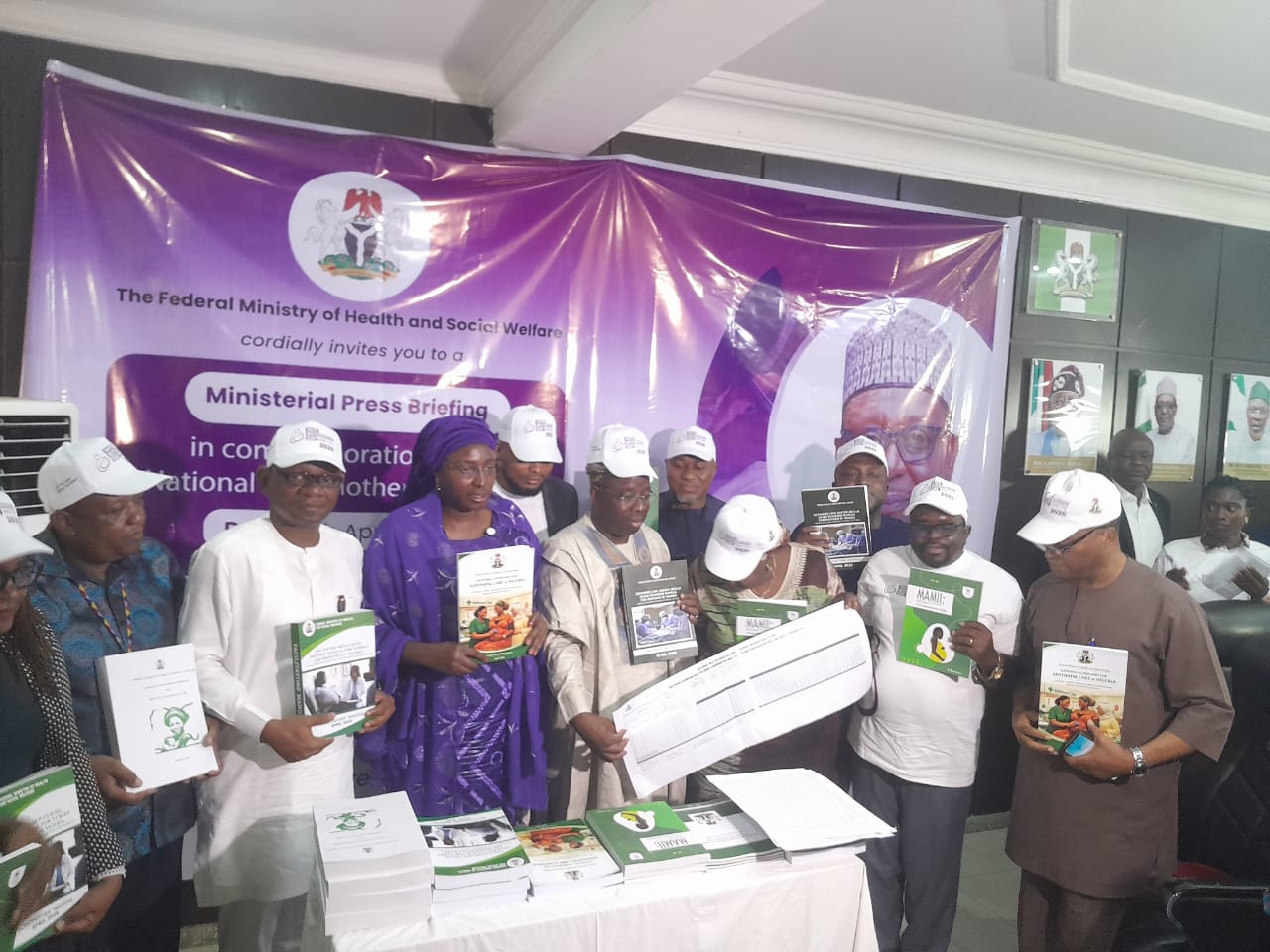
A major highlight of the event was the launch of key policy and technical documents designed to improve maternal and newborn care. These include the National Antenatal Care Guidelines, the National Clinical Service Protocol for Obstetric and Neonatal Care, and the revised Life-Saving Skills (LSS) Training Package for frontline health workers.
According to the WHO, these tools are critical to translating policy into practice and ensuring standardized, evidence-based care for pregnant women and newborns.
Reaffirming its support, the organization pledged continued technical assistance to the Nigerian government, particularly in strengthening the health workforce, including midwives, and improving overall health outcomes.
The WHO Representative, in his concluding message urged stakeholders to prioritize quality care, noting that it is essential to reducing maternal mortality and ensuring safe motherhood across Nigeria.
END

