
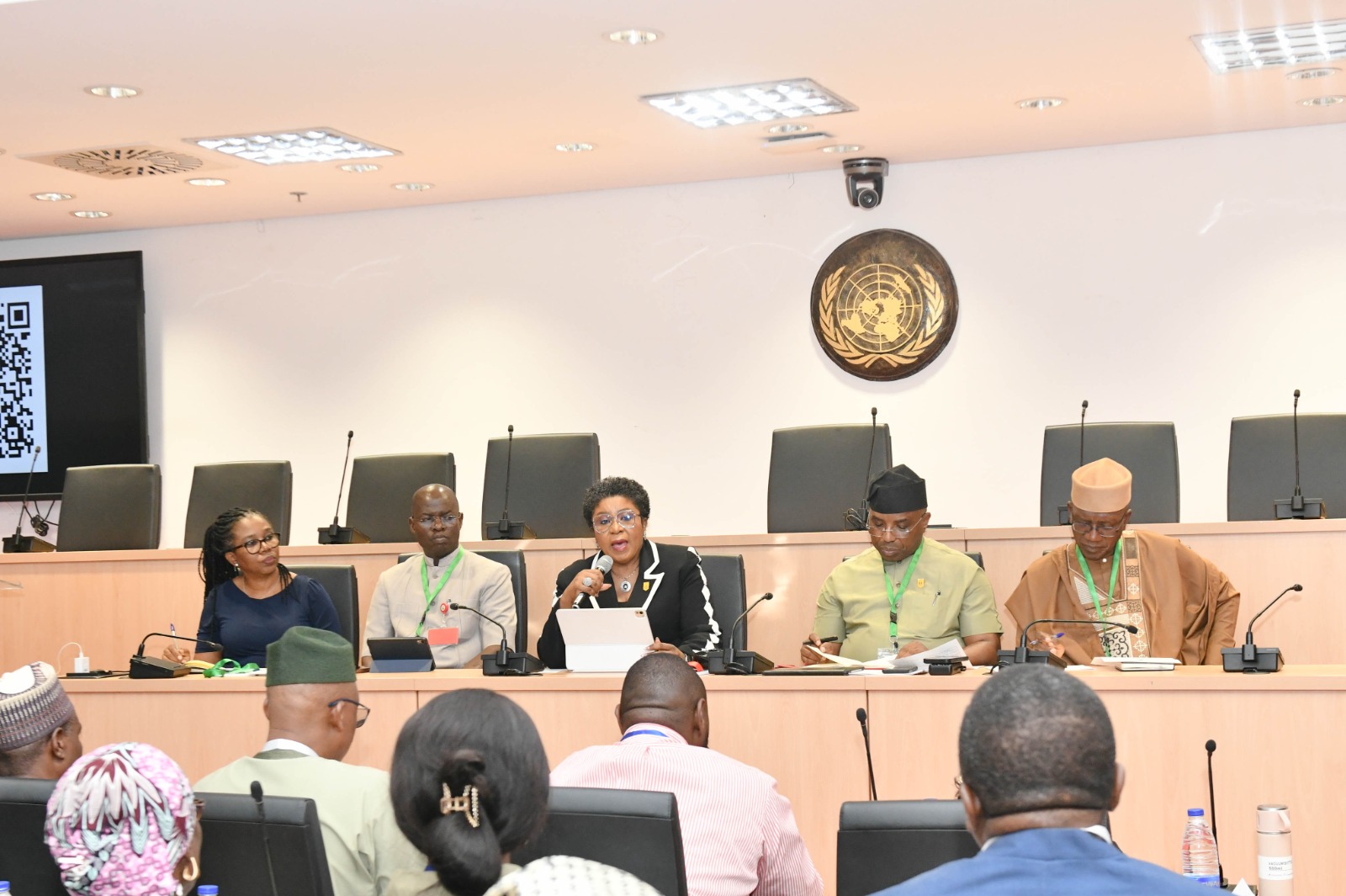
Odimmegwa Johnpeter/Abuja
The Head of the Civil Service of the Federation Mrs. Didi Esther Walson-Jack, OON, mni, has formally closed the End-Term Review of the Federal Civil Service Strategy and Implementation Plan 2021–2025 (FCSSIP25), describing the exercise as a critical milestone in shaping the next phase of reforms for a more efficient, innovative and citizen-centred Federal Civil Service. This was contained in a statement signed by Mrs. Eno Olotu, mnipr, Director, Press, and Public Relations.
Speaking at the closing session held at the UN House Auditorium, Abuja, on Wednesday, 17 June 2026, the HCSF noted that the review provided an opportunity for stakeholders to assess the implementation of FCSSIP25, identify achievements and gaps, and generate practical recommendations for the development of the successor strategy, FCSSIP 2026–2030.
Mrs. Walson-Jack stated that discussions over the two review sessions focused on the six reform pillars of FCSSIP25—Capability Building and Talent Management, Performance Management System, IPPIS-HR, Innovation, Digitalisation and Staff Welfare.
She observed that the review confirmed significant progress in strengthening institutional capacity, advancing digital transformation, promoting innovation, improving human resource management, and enhancing staff welfare across the Federal Civil Service.
The HCSF stressed that while notable gains had been recorded, reform remains a continuous journey that requires stronger institutionalisation, effective monitoring and evaluation, sustained performance management, deeper digital transformation and greater attention to staff motivation and well-being. She emphasised that these lessons would shape the priorities and implementation approach of FCSSIP 2026–2030.
Mrs. Walson-Jack called on Ministries and Extra-Ministerial Departments to sustain the momentum of reform by strengthening collaboration, embracing innovation and digitalisation, sharing knowledge, and ensuring ownership of the reform agenda.
The HCSF reaffirmed that a modern, performance-driven, and digitally enabled Civil Service remains essential to effective governance and national development. She therefore urged stakeholders to remain committed to building a Federal Civil Service capable of delivering on government priorities and meeting the evolving expectations of Nigerians.
She also expressed appreciation to the United Nations Development Programme (UNDP), Permanent Secretaries, Directors, the FCSSIP Project Team, and other stakeholders for their contributions to the success of the review.
The sessions had in attendance, Directors Human Resource Management, Reforms Coordination and Service Innovation, ICT, IPPIS (OAGF), and Directors in the Office of the Head of the Civil Service of the Federation.
END

